Market · New Construction · September 2026
Builder Incentives and Clark County Luxury Home Pricing: What Buyers and Sellers Should Compare
A competing home’s asking price tells only part of the story. Financing incentives, closing-cost credits and the cost of finishing a new home can change which property offers the stronger value.
For a Clark County homeowner preparing to sell, the competition may include a newly built home with a financing package that makes its higher asking price easier for a buyer to carry. For a buyer, the opposite problem is just as real: an attractive incentive can distract from an expensive lot premium, unfinished outdoor space or a payment that increases after the introductory period.
The consequential development this September is the combination of higher national mortgage rates and greater use of builder incentives nationally. For luxury homes in Vancouver, Camas, Ridgefield and the surrounding Clark County communities, that makes a property-specific comparison especially useful. It does not establish that local luxury prices have fallen or that every builder is offering a discount.
What changed in September 2026?
| Indicator | Earlier reading | Latest reading |
|---|---|---|
| Builders using sales incentives | 63% in August | 66% in September |
| Builders cutting prices | 35% in August | 38% in September |
| Builder confidence index | 35 in August | 32 in September |
| 30-year fixed mortgage average | 6.76% the prior week | 6.95% on September 17 |
Sources: NAHB/Wells Fargo Housing Market Index, September 2026 and Freddie Mac Primary Mortgage Market Survey, September 17, 2026. Incentive and price-cut shares each increased three percentage points. These measures cover different populations and are not a local sales-price index.
NAHB also reported an average price cut of 6% among builders reporting cuts. That is not a discount available on every new home. Freddie Mac’s rate is a national conventional conforming mortgage benchmark, not a Clark County lender quote or a jumbo-loan rate.
What the data support — and what is interpretation
Verified: the national survey changes above. Interpretation: sellers whose homes compete directly with new construction should evaluate the competing financial package alongside the physical property. Not established: a countywide increase in builder concessions, a decline in Clark County luxury sale prices, or a standard local discount. No fresh local luxury closed-sale dataset was verified for this article.
Where new construction enters the Clark County comparison
Local new-home choices are tangible. Pacific Lifestyle Homes’ Southwest Washington community directory, reviewed September 19, lists Paradise Pointe in Ridgefield, The Nines at Camas Meadows Golf Course Homes in Camas, and Salmon Creek Ridge in Vancouver. Its advertised starting prices were $724,000, $832,000 and $749,000, respectively.
Those are builder-advertised starting prices, not completed-home sale prices, luxury-market medians or verified incentive offers. The builder notes that pricing depends on the lot, elevation, selections and availability. These examples establish local alternatives; they do not show that any particular resale home competes with them.
Local application: build the comparison around the buyer’s actual shortlist. A newer resale with similar size, layout and location may face meaningful competition from a nearby new build. A waterfront property, custom estate or acreage home may serve a different need entirely. A discount on a substitute that the buyer would never choose says little about the value of the home they want.
For a closer comparison of the property types, see our guide to Ridgefield new construction versus nearly-new resale.
Compare four numbers before negotiating
- The completed purchase price. Include the selected lot, structural options, finishes and items necessary to make the home usable for your household. Compare that figure with a resale home’s condition and included improvements.
- Cash required at closing. Separate the down payment, closing costs, prepaid expenses and usable credits. A large advertised incentive has little value if the buyer cannot apply all of it.
- The payment over time. Review the initial payment and any later payment changes, plus taxes, insurance, mortgage insurance and association dues. Ask for the terms in writing.
- The cost over your expected ownership period. Include financing charges, necessary improvements and likely maintenance. Compare remaining loan balances as well as cash spent; principal payments build equity and should not be treated entirely as an expense.
The Consumer Financial Protection Bureau’s Loan Estimate guide provides a practical framework for comparing mortgage terms, cash to close and fees. Obtain comparable estimates from the builder’s lender and an independent lender using the same loan amount, loan type and rate-lock period.
A $20,000 price reduction and a $20,000 credit do different jobs
Hypothetical illustration, not a listing or loan offer: consider a $1.2 million home, a 20% down payment and a 30-year fixed loan at an assumed 6.95%. One option keeps the price at $1.2 million and provides a $20,000 seller credit toward eligible closing costs. Another reduces the price to $1.18 million without a credit.
| Comparison | $20,000 credit | $20,000 price reduction |
|---|---|---|
| Contract price | $1,200,000 | $1,180,000 |
| 20% down payment | $240,000 | $236,000 |
| Loan amount | $960,000 | $944,000 |
| Monthly principal and interest | About $6,355 | About $6,249 |
| Price less stated seller credit | $1,180,000 | $1,180,000 |
The price reduction lowers principal-and-interest payments by approximately $106 a month and reduces the down payment by $4,000. The credit can instead reduce eligible closing costs by up to $20,000, subject to actual costs and lender approval. It does not reduce the principal balance in this example. Actual seller proceeds will also reflect other transaction expenses.
This illustration assumes the credit pays closing costs, not discount points, and holds the interest rate constant. Using a credit to buy down a rate requires a separate lender quote. A $20,000 contribution does not purchase a fixed, universal rate reduction. These loan amounts may require jumbo financing, so the national conforming benchmark above is used only as a calculation assumption.
What luxury sellers should discuss before changing the price
Start with the buyer’s alternatives. Review current competing homes, recent comparable closings, pending activity where available, condition, location and concessions that can be verified. An advertised incentive is worth investigating; it is not evidence of what a completed transaction ultimately cost.
Then prepare two or three offer structures with estimated seller proceeds. One may emphasize price, another an eligible closing-cost contribution, and another completed repairs or a flexible possession date. The useful question is which structure addresses a real buyer obstacle while protecting the seller’s result.
Client conversation: “Before we reduce the price, let’s identify what buyers are comparing us against and whether their objection is value, condition, cash at closing or the monthly payment.”
For a distinctive home, document the attributes a new build cannot readily replace: an established setting, usable acreage, a particular view, architectural character or a completed landscape. Those advantages need evidence and relevant comparables. Expensive finishes alone do not establish a premium. Our guide to pricing a unique home without close comparables explains that process.
What buyers should ask about a builder incentive
- Which specific homes qualify, and what are the contract and closing deadlines?
- Is the advertised benefit a price reduction, a seller contribution, an upgrade allowance or financing assistance?
- Does the offer require a particular lender or service provider, and how does the complete quote compare with alternatives?
- If the benefit reduces payments temporarily, what will the payment become afterward?
- What happens if construction or closing is delayed, or the buyer cannot use the full credit?
- Which improvements remain outside the purchase price, and what will they cost?
Client conversation: “Let’s compare the written terms and the finished home, then decide whether the incentive improves your actual outcome.”
For permanent rate reductions, CFPB explains that discount points exchange upfront cost for a lower interest rate; the value depends partly on how long the borrower keeps the loan. Avoid choosing a home on the assumption that refinancing will become available on favorable terms.
The alternative worth considering: a resale home with the expensive work finished
A home without a promotional incentive may still offer better value if it already includes improvements the buyer would otherwise fund: appropriate landscaping, fencing, window coverings, storage or a useful outdoor living area. Verify their condition and realistic replacement cost. A seller’s original spending does not automatically become resale value.
For a cash buyer, a financing-only promotion may be less useful than a lower price, completed work or favorable timing. Ask whether an alternative benefit is available; do not assume it can be converted into cash. The strongest offer is the one that fits the property and the buyer’s priorities.
Frequently asked questions
Do builder incentives mean Clark County luxury prices are falling?
No. An incentive is a transaction term, not a local price index. The national survey establishes broader builder behavior. Determining local price direction requires comparable Clark County closed sales for the relevant period and property type.
Is a seller credit better than a lower price?
It depends on the buyer’s cash needs, loan terms and expected ownership period. A lower price reduces the purchase amount; an eligible credit can reduce cash needed for closing expenses. Compare both with a lender and a seller net sheet.
Should a luxury resale seller match a builder’s incentive?
Only after establishing that the homes are meaningful substitutes and the proposed terms are financially sensible. A different lot, location, layout or condition can matter more than the advertised promotion.
What should I bring to a new-construction consultation?
Bring the property address or lot number, written incentive terms, selected options, estimated completion date, financing quote and any resale homes you are considering. Those details allow a useful comparison.
Compare your home against the choices buyers actually have
Considering a luxury home purchase or sale in Vancouver, Camas, Ridgefield, Felida, Brush Prairie or Hockinson? Request a property-specific comparison of new construction, resale alternatives and pricing strategy with Oksana Berezhnoy.
Sources and methodology
Research reviewed September 19, 2026, Pacific time. National indicators retain their original reporting periods. Local community prices are advertised starting prices and may change. Analysis and hypothetical calculations are identified separately from reported data.
- NAHB: September 2026 builder confidence, incentives and price-cut survey
- Freddie Mac: September 17, 2026 mortgage survey and methodology
- Pacific Lifestyle Homes: Southwest Washington communities and pricing qualifications
- CFPB: comparing Loan Estimates
- CFPB: discount points and lender credits
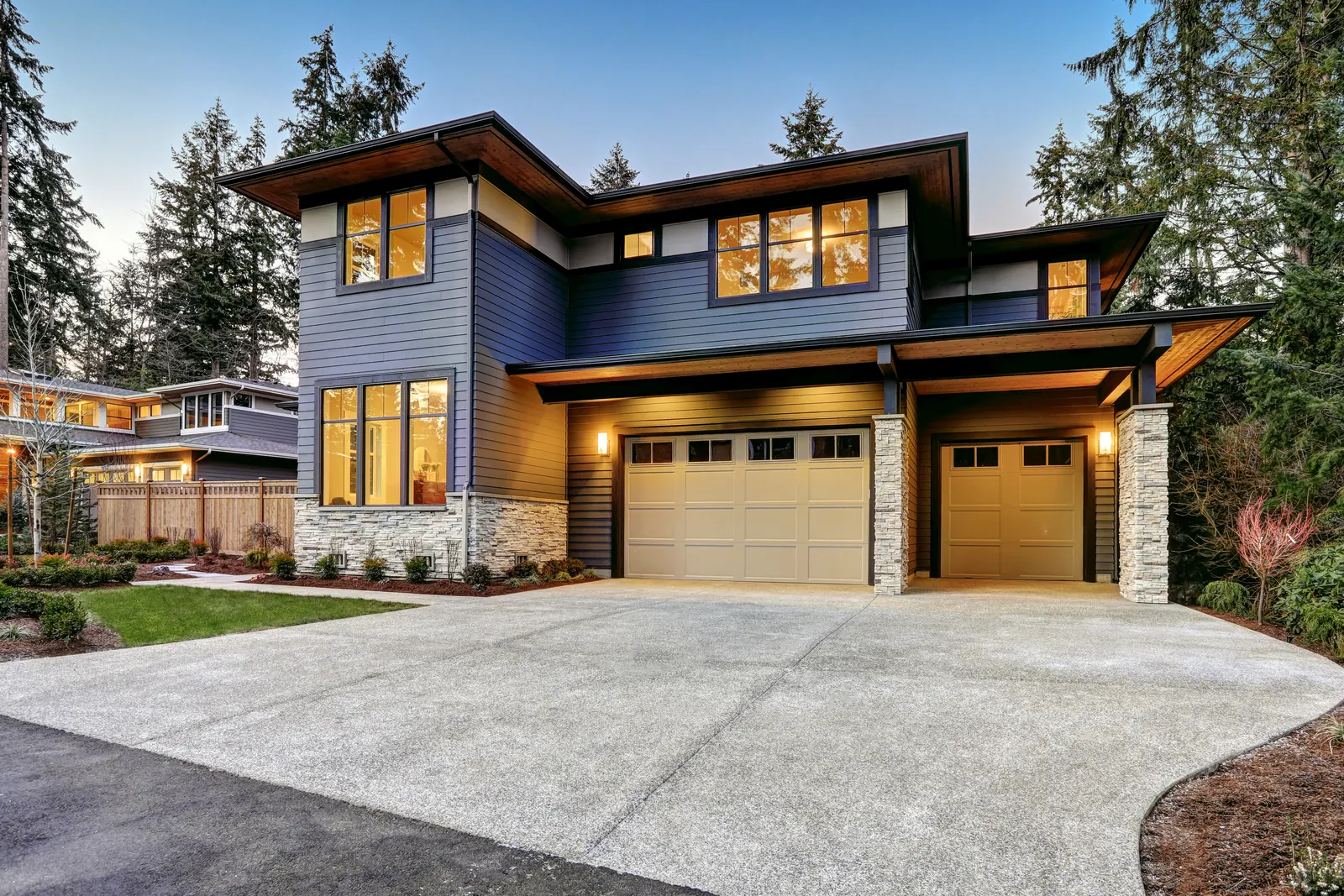
Photography is representative residential imagery, not an identified listing or a home associated with an incentive described here. General market commentary; individual financing, valuation and contract decisions require property-specific review.