Vancouver Waterfront Living: Condos, Views, and Access
Walkable riverfront living, lock-and-leave ownership, and a scarce supply of view residences have made this the county’s most resilient luxury address. A look at who is buying, and why.
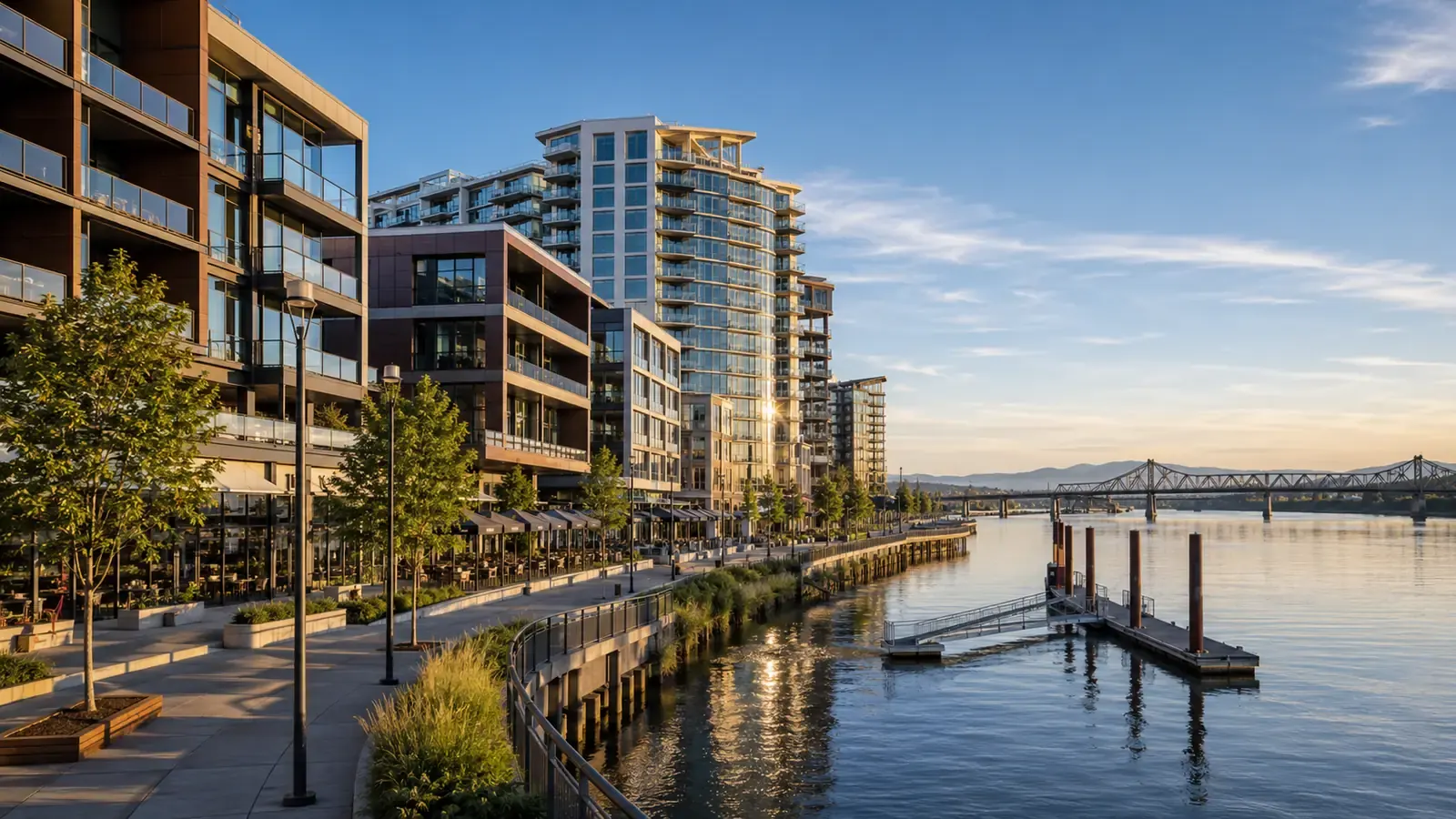
A decade ago, the stretch of Columbia River shoreline west of the interstate was industrial land. Today it is the most-watched luxury address in Clark County — and the numbers explain why the district keeps rewriting its own ceiling.
Scarcity is the whole story
There are only so many residences with an unobstructed river view and a front door steps from the promenade. That fixed supply, against steady demand from downsizing owners and relocating executives, keeps the district trading close to list and quickly — even in quarters when the broader market softens.
The buyers here are not chasing square footage. They are buying a way of living that the rest of the county can’t replicate.
Identifying Buyer Profiles for Vancouver Waterfront Condos
Three profiles dominate the district. Empty-nesters trading an acreage estate for lock-and-leave convenience. Out-of-state professionals drawn by walkability and no state income tax. And a smaller group of investors who understand that view inventory rarely comes back to market twice in a cycle.
- Lock-and-leave ownership with minimal maintenance
- Riverfront dining, amenities, and the promenade at the door
- View protection that supports long-term resale
What it means if you’re considering a move
If you are buying, be ready to act — the best view residences are often placed before they reach the open market. If you are selling elsewhere in the county and eyeing the waterfront, the two moves can be sequenced so your timing, possession, and financing align as a single plan.
Either way, the district rewards preparation over speed. Know what you want, understand the fundamentals, and be positioned to move when the right home surfaces.
The buildings, one by one
“The waterfront” is not one market. Each building carries its own dues structure, view profile, and resale depth — and those differences matter more than square footage when you resell.
| Building | Character | What to know |
|---|---|---|
| Kirkland Tower | High-rise views | The district’s signature tower. Upper-floor and full-floor residences command the strongest premiums; confirm exactly what the view easement protects. |
| Murdock | Boutique riverfront | Fewer units, quieter feel. Corner plans with dual exposure hold value best. |
| Rediviva | Mixed-use | Retail and dining below; verify sound transmission and how commercial parking interacts with resident access. |
| Newer phases | Still building out | Pre-sale pricing can be attractive, but you are underwriting a view that later phases may alter. |
If you are weighing the towers against detached riverfront, read our Waterfront district guide alongside the Columbia River & Evergreen Highway guide — the two segments behave very differently on resale.
The diligence that actually protects a condominium purchase
On a detached estate, the inspection carries most of the weight. In a tower, the building’s finances and governing documents carry more risk than the drywall. Three documents deserve a careful read before your contingency expires.
- The resale certificate and budget — reserve balance, current dues, and any assessment discussed but not yet levied.
- Meeting minutes, twelve months back — this is where envelope, deck, and elevator problems surface before they reach an owner notice.
- Rules on rentals and lock-and-leave — if you travel or plan to lease, confirm minimum-term and cap rules in writing.
Buyer Scenario
A view that would not have survived phase two
A relocating couple fell for a mid-floor unit with a clean river outlook and were ready to write at full price. Before removing the feasibility contingency, we pulled the district’s approved site plans and confirmed the height envelope of the parcel directly west.
The outlook they were paying a premium for would have been partly interrupted by a later phase. They moved two floors up in the same building for a modest increase — protecting both the view and the resale story.
The lesson is not that the building was a bad buy. It is that a view premium is only worth paying when something durable protects it.
Composite scenario for illustration — not a specific transaction
Treating dues as an afterthought
On a $1.5M residence, a $200 monthly increase is a real change to your carrying cost — and a lever future buyers will price in.
Assuming every unit is “waterfront”
Orientation, floor, and setback separate a true river outlook from a partial one. The listing language will not make that distinction for you.
Skipping the minutes
Budgets show today. Minutes show what the board already knows is coming.
Waiting for public inventory
Well-positioned view residences can move quickly once they reach the market. Watching only the public portals can mean hearing about them late — a broker who tracks new inventory helps you act promptly and with full information.
Decision Checklist
Before you write on a waterfront residence
- Resale certificate, current budget, and reserve study in hand
- Twelve months of board minutes read, not skimmed
- Rental, pet, and lock-and-leave rules confirmed in writing
- View protection verified against approved plans for adjacent parcels
- Dues, property tax, and insurance modeled as a single monthly carrying cost
- Parking, storage, and any deeded assignments confirmed on title
Verify It Yourself · Official Sources
City of Vancouver — Planning, permitting, and development activity for the waterfront district
Clark County Assessor — Parcel records, assessed values, and tax history
Clark County — Property records, GIS mapping, and public documents
Your next step
If the district is on your list, the useful first move is not touring — it is deciding which building and which exposure fit how you actually live. That conversation takes twenty minutes and saves months.