Clark County Market Note · November 20, 2026
Clark County’s $832,750 Line: What the Pending 2027 Conforming Loan Limit Means for Buyers Near $1 Million
Every November, the federal government resets the largest mortgage Fannie Mae and Freddie Mac can buy. Above that line, a loan becomes “jumbo.” As of November 20, the 2027 number has not been announced, some lenders are already lending above today’s limit, and mortgage rates just turned back up. For Clark County buyers shopping roughly $900,000 to $1.1 million, the details are worth getting right before writing an offer.

Where things stand this week
2026 conforming limit · Clark County
$832,750
One-unit home. Clark County uses the national baseline, not a higher “high-cost” limit. Set by FHFA in November 2025.
2027 limit · as of Nov. 20
Not yet set
FHFA’s news releases show no 2027 announcement. Last year’s came on November 25. Lender “early limits” are not official.
30-yr fixed · Freddie Mac
7.28%
Week of Nov. 19, up from 7.11%, ending four weekly declines. A year ago: 6.26%. National, conforming loans.
Sources: FHFA, 2026 conforming loan limit announcement and news release index (checked November 20, 2026); Freddie Mac, Primary Mortgage Market Survey, November 19, 2026.
A conforming limit is a loan-size rule, not a price rule. Whether it touches you depends on your purchase price and your down payment together.
Who the line actually affects
The limit applies to the loan amount. So the purchase price at which a buyer crosses into jumbo territory depends on how much they put down. Using the 2026 limit of $832,750:
| Down payment | Highest price still conforming |
|---|---|
| 10% | about $925,000 |
| 20% | about $1,041,000 |
| 25% | about $1,110,000 |
Calculated for this article. Loan amount = price × (1 − down payment). Rounded. Conforming eligibility also depends on credit, debt-to-income, property type and lender overlays; this table only tests the loan-size limit.
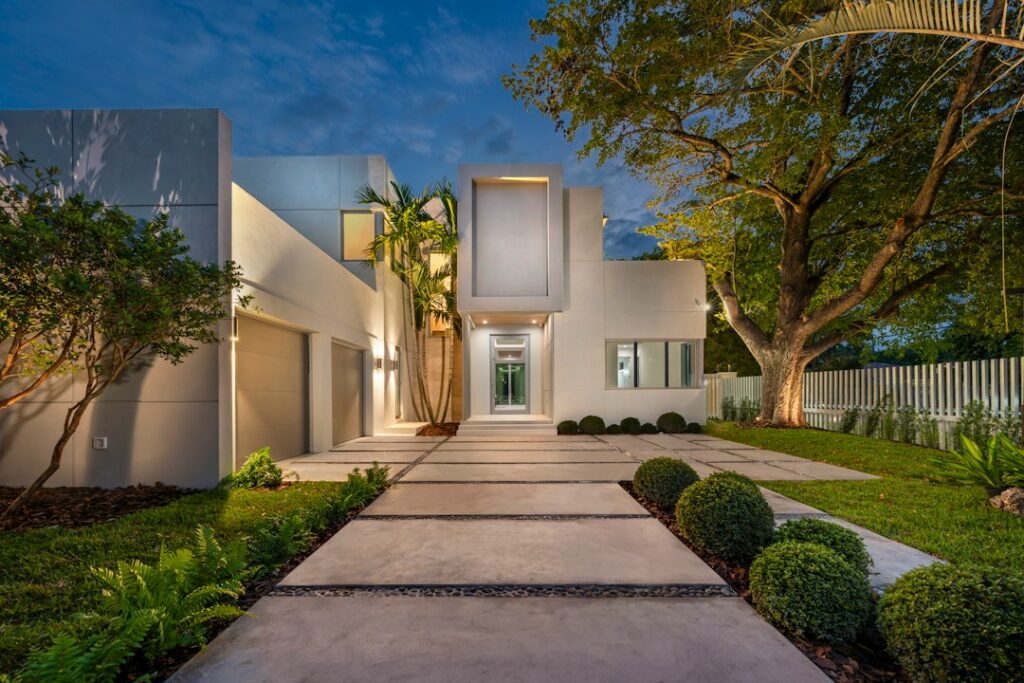
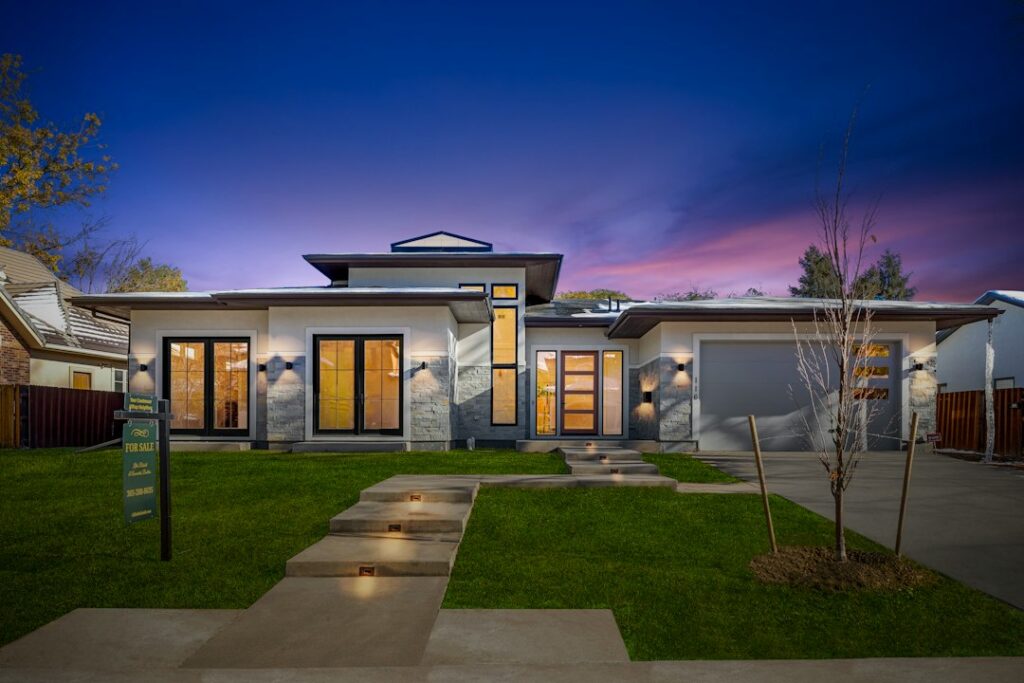
Why this band matters locally: Clark County’s October median sale price was $550,000 in RMLS reporting (local evidence), so the conforming line sits well above the typical sale. But several new-construction communities in Camas and Ridgefield currently advertise starting prices between roughly $890,000 and $1 million on builder listing portals, and the $900,000–$1.1 million band is a common price point for move-up homes in Camas, Ridgefield and Brush Prairie (our market observation, not an MLS statistic). For context on what that budget buys, see our $1 million comparison across Camas, Ridgefield, Vancouver and Brush Prairie. For why two MLS systems report Clark County’s October median differently, see our explainer on October’s two reports.
The 2027 limit: what is known and what is not
Verified
- The 2026 one-unit baseline is $832,750, up from $806,500 in 2025. The national high-cost ceiling is $1,249,125.
- FHFA sets the new baseline from the change in its House Price Index between third quarters. The 2026 increase was about 3.26%.
- As of November 20, 2026, FHFA had not published 2027 values. New limits typically take effect January 1.
- FHFA’s own index showed U.S. house prices up 2.4% from August 2025 to August 2026 (FHFA, Oct. 27). That is a monthly figure, not the third-quarter calculation FHFA will use.
Reported, not official
- Industry outlets report that some lenders are already making conforming loans above $832,750 based on their own estimates of the 2027 limit, at figures from about $845,000 to $850,000 (The Mortgage Reports, Nov. 18; National Mortgage Professional).
- Those programs vary by lender and come with conditions. FHFA’s final number could come in different from any of them.
- Interpretation: a modest increase is widely expected because national prices rose, but the size is unknown until FHFA publishes it.
Jumbo versus conforming: the rate gap is small this week, the rules gap is not
Daily rate averages differ by source, and they move. On November 18, Mortgage Research Center data reported by Fortune put the 30-year conventional average at 7.355% and the 30-year jumbo at 7.529%. Bankrate’s lender survey the same day showed 7.42% and 7.45%. (Fortune; Bankrate.) These are national averages, not Clark County quotes.
Interpretation: on those averages, the jumbo premium was roughly 3 to 17 basis points. On an $850,000 loan, a 17-basis-point gap is about $100 a month in principal and interest. That is real money, but for many buyers the bigger difference is underwriting: jumbo lenders commonly set their own minimum down payment, credit score, debt-to-income limits and post-closing reserve requirements, and some require additional appraisal review. Those terms vary widely by lender.
Payment illustration at this week’s rates
| Loan amount | At 7.28% | At 7.529% |
|---|---|---|
| $832,750 | $5,698 | — |
| $850,000 | $5,816 | $5,960 |
| $1,000,000 | $6,842 | $7,012 |
| $1,200,000 | — | $8,414 |
Hypothetical illustration, calculated for this article. 30-year fixed, principal and interest only. 7.28% is Freddie Mac’s November 19 conforming average; 7.529% is the November 18 MRC jumbo average reported by Fortune. The two come from different surveys and are used only to show scale. Excludes taxes, insurance and HOA dues. Your quoted rate depends on your credit, down payment, points and lender. For more loan sizes, see our payment-math guide.
For a sense of rate sensitivity: on a $1,000,000 loan, last week’s move from 7.11% to 7.28% adds about $115 a month.
What buyers near the line should do
- Calculate your loan amount, not just your price. Know which side of $832,750 your planned loan falls on at your intended down payment, and how much extra cash would bring it under.
- Get one conforming and one jumbo quote. Ask each lender for the rate, points, minimum down payment, reserve requirement and debt-to-income limit in writing on the same day. Freddie Mac’s chief economist noted this week that comparing multiple quotes can save borrowers thousands over the life of a loan.
- Ask any lender offering an “early 2027 limit” what happens if FHFA’s number is lower. Clarify whether the program depends on closing after January 1, what conditions apply and whether the loan could be repriced.
- Match your closing date to the rule you are relying on. If your plan depends on a higher 2027 limit, discuss with your lender whether a January closing is necessary, and build that into the purchase agreement rather than assuming it.
- Consider structure before stretching. A slightly larger down payment, a negotiated price, or seller credits can sometimes bring a loan under the line. On new construction, compare a builder’s rate buydown with a price reduction; our builder-incentive guide walks through the math.
- Keep a real financing contingency. With October inventory at about 4.4 months in RMLS data and pending sales down year over year, most sellers in this band have less leverage to require waivers. See what Clark County buyers can negotiate besides price.
What sellers between $900,000 and $1.1 million should know
Your buyer pool may be sorted by loan type. Buyers who need conforming financing at 10% down top out near $925,000 under today’s limit. A listing priced just above a buyer’s conforming ceiling can lose part of that audience. Interpretation: this is one reason to test pricing against both down-payment scenarios, not only against comparable sales.
Judge offers by financing certainty. Ask the buyer’s agent which loan program is being used, whether it is an early-limit conforming program, and what the lender has verified. A slightly lower offer with full underwriting can be worth more than a higher one with an uncertain loan.
Launch carefully. In a market where contracts slowed while prices held, the first weeks on market carry the most attention—see why the first 10–14 days matter.
A practical client conversation
Hypothetical example: “At your down payment, your loan lands about $30,000 over this year’s conforming limit. The 2027 limit isn’t official yet, and the rate difference between conforming and jumbo is small this week. So let’s get both quotes in writing, see which one has the better total terms for you, and only build the offer around a 2027 limit once we know exactly what the lender requires.”
Also on our radar this week
- More family-sized townhomes in central Vancouver. Seventy three- and four-bedroom townhomes are proposed on 2.7 acres at the former Vanco Golf Range site, 703 N. Devine Road, with construction possible as early as 2027, according to documents submitted to the city (The Columbian, Nov. 17). Not a luxury project, but part of the Heights District’s new supply.
- Rates reversed course. Freddie Mac’s 15-year average rose to 6.66% from 6.45%, alongside the 30-year move to 7.28%. A year ago the 15-year averaged 5.54%.
Source and scope note
Reviewed November 20, 2026. Conforming limit figures are from FHFA’s 2026 announcement; the absence of a 2027 announcement was confirmed on FHFA’s news release index on November 20. Early lender limits are as reported by industry outlets and are not official. Mortgage rates are national averages from Freddie Mac (November 19), Mortgage Research Center via Fortune (November 18) and Bankrate (November 18); each source uses a different method. Clark County market figures are October 2026 RMLS data as reported publicly. Interpretations are labeled. Payment figures are hypothetical principal-and-interest illustrations. No new countywide MLS statistics were released during this review window. This is general real-estate information, not lending, financial or legal advice; confirm terms with your lender.
Shopping near $1 million in Clark County?
Oksana Berezhnoy can help you map price, down payment and loan type to the homes you’re considering, compare recent closed sales in your band, and structure an offer that holds up to underwriting.