Selling · Valuation
How to Price a Unique Home When There Are No Good Comparables
When nothing nearby is truly comparable, pricing does not become guesswork. It becomes a question of building evidence from several directions and reading what the property’s most likely buyers would actually pay.
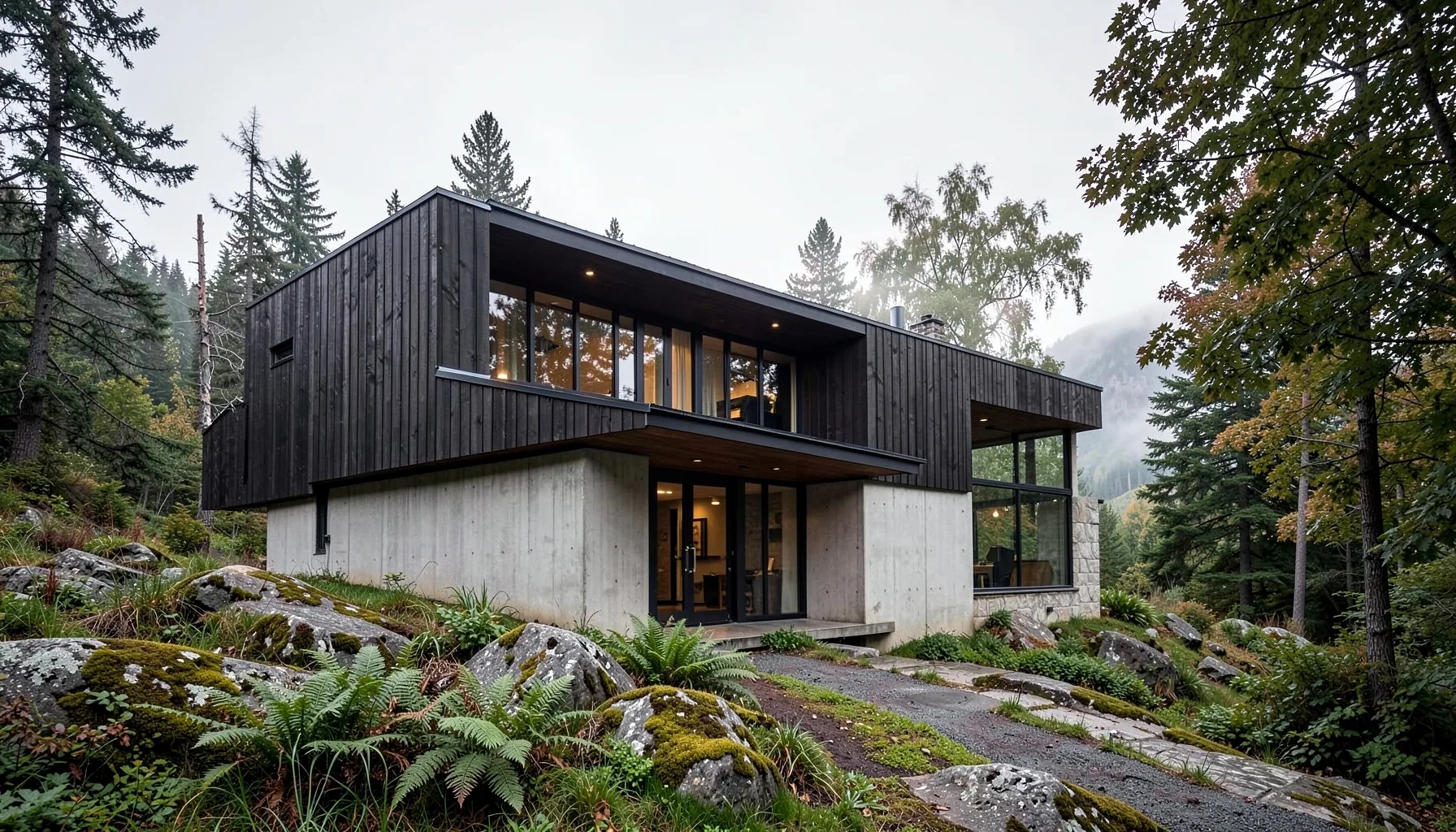
A homeowner spends years building something that does not exist anywhere near it. Perhaps it is a residence on twelve acres in Hockinson, with a shop designed around a specific set of tools. Perhaps it is a home on the Evergreen Highway bluff where the river view is the entire architectural premise. Perhaps it is a deeply renovated house surrounded by conventional 1990s neighbors who never asked for anything like it.
Then comes the question I hear in some form nearly every time:
If nothing around my home is truly comparable, how do you know what it is worth?
It deserves a better answer than most sellers receive. Taking the three nearest sales, dividing by square footage and applying the result to a distinctive property is a method almost guaranteed to be wrong — sometimes badly, and in either direction.
The honest answer is that a property like this should not produce a single number at all. It should produce three.
Comparable has never meant identical
The first idea worth releasing is that a real comparable must be a similar house on a similar street that sold in the last ninety days. That standard does not even govern lender appraisals.
Fannie Mae’s Selling Guide, which most financed transactions ultimately answer to, states plainly that “the best and most appropriate comparable sales may not always be the most recent sales.” Where activity is thin, it permits older transactions when the appraiser explains why. It permits comparables from competing neighborhoods when differences are addressed. And where truly comparable sales do not exist, it accepts properties that are not truly comparable at all, provided the analysis is documented.
That reframes the exercise. The standard is not similarity — it is explained relevance. Which opens up evidence most sellers never see considered: older but genuinely similar sales, homes with different architecture but the same buyer appeal, properties in competing Clark County submarkets, the subject’s own prior sales, expired and withdrawn listings, land value and replacement cost. An eighteen-month-old sale of a similar custom home can tell you more than last month’s sale of a house that shares only a ZIP code.
Start with the buyer, not the house
Here is the shift that changes most of these conversations. The useful question is rarely what house looks like this one? It is what else could this buyer purchase with the same money?
A buyer considering a distinctive property in the low $2 millions here is not comparing it to the house next door. They are weighing a newer luxury home in Camas, acreage in Ridgefield, a custom estate in Brush Prairie, a river-view or waterfront property along the Columbia, and quite possibly something across the river closer to Portland.
Those alternatives are the real competitive set. They shape the ceiling far more than any neighborhood average, because they are what the buyer will actually choose between. When I evaluate a property with no obvious comparables, I widen the analysis — not the assumptions.
Build three groups of comparables, not one
Rather than forcing one imperfect set to carry the argument, build three. Each answers a different question, and the disagreement between them is itself informative.
| Comparable set | The question it answers | Where the evidence comes from |
|---|---|---|
| Local substitutes | What does this location itself command? | Conventional but high-quality homes in the immediate submarket. Establishes the baseline the property builds on. |
| Property analogues | What does the market pay for this kind of property? | Similar design, construction quality, acreage, view, privacy or specialty amenities — often further away, or further back in time. |
| Buyer alternatives | What else competes for this buyer’s budget? | Properties that do not resemble the subject at all but compete for the same money across Clark County and the wider metro. |
A fourth source is easy to overlook: the property’s own transaction history. For a singular home, its previous sale — adjusted for time, market movement and work completed since — is sometimes the most comparable data point available, because the house is more like its earlier self than anything currently selling.
When all three point to a similar range, confidence is high. When they diverge sharply, that divergence is the finding — it identifies the attribute whose value the market has not settled.

Adjust for what buyers value, not what the work cost
This is where pricing conversations about unique homes quietly go wrong.
Real differences — location, lot, views, privacy, finished area, construction quality, condition, guest quarters, shops, outdoor living, waterfront access, landscaping, and how well the plan actually functions — all warrant adjustment. The question is how much.
Fannie Mae is unambiguous: “The appraiser’s adjustments must reflect the market’s reaction… to the difference in the properties.” It imposes no percentage caps, stating it “does not have specific limitations or guidelines associated with net or gross adjustments.” The size of an adjustment is not the test. Support for it is.
The cost of an improvement is not the amount a buyer will pay for it.
A $250,000 improvement does not raise market value by $250,000. It might contribute $180,000. It might contribute $60,000. Occasionally — with a highly personal installation the buyer intends to remove — it contributes nothing at all.
Appraisers call this contributory value: not what something cost, not what it is worth to the owner, but what its presence adds to what a buyer will pay. Separating those three ideas is most of the work, and it is why a conversation about which improvements actually matter on a luxury home belongs before the money is spent. The same discipline applies to attributes buyers assume are self-evidently valuable — the difference between true waterfront and a water view being a case in point.
Price per square foot describes a sale. It rarely explains one.
Two homes of identical size in Clark County can transact hundreds of thousands of dollars apart, and none of that gap lives in the square footage. It lives in land, orientation, view, privacy, architecture, materials, condition, layout and location.
It is a useful diagnostic — it can flag when an assumption has drifted far from the market — but a poor primary method, and it is at its worst on exactly the properties this article concerns: the numerator contains everything unusual and the denominator contains none of it. A well-designed 4,200 square feet frequently outperforms a poorly conceived 5,500.
Use replacement cost as a boundary, not an answer
The cost approach, simply
Land value + current replacement cost − physical depreciation − functional obsolescence = one indication of value.
Most useful for newer custom construction and specialty properties where comparable evidence is thin. The IRS’s real property valuation guidelines note the cost approach is particularly applicable to specialty properties when other approaches lack adequate supporting data — provided land value and depreciation can be reasonably determined.
One distinction matters enormously. Replacement cost asks what it would take to build equivalent utility today. Reproduction cost asks what it would take to duplicate this exact house — the imported stone, the discontinued glazing, the timber no longer milled that way.
For a highly customized property, reproduction cost can be extraordinary while market value sits well below it. That gap is not an error — it is the market declining to reimburse choices made for the owner’s benefit rather than the next buyer’s.
Rare and desirable is not the same as rare
If one idea is worth carrying away from this article, it is this one. Uniqueness cuts in both directions. It can create genuine scarcity value. It can also shrink the buyer pool enough to lengthen the sale and weaken negotiating position — sometimes both at once.
Rare and desirable
An irreplaceable site. A protected view corridor. True river frontage. Architecture that is coherent and well executed. Acreage with privacy and clean utility records. Craftsmanship a buyer notices without being told to look. These narrow the field of substitutes, which supports price.
Rare because few people want it
Deeply personalized layouts. Large homes with inefficient circulation. Insufficient storage. Aging specialty systems few contractors service. Materials that are costly to maintain. Restrictions that limit change. Deferred maintenance a buyer must price. These narrow the field of buyers, which pressures price.
Most distinctive properties contain some of each, and an honest analysis names both columns out loud. A seller is far better served hearing where resistance will come from before launch than discovering it in week ten.
Architecture and provenance need evidence, not assumptions
Design pedigree can genuinely influence value. Peer-reviewed work supports it: a study in the Journal of Real Estate Finance and Economics by Lindenthal and Johnson found statistically and economically significant price differences across architectural styles — while also finding the effect attenuates for properties whose style is less clearly defined.
That second half is usually left out. The premium exists to the degree buyers recognize and value it — not automatically, and not uniformly. So there is no defensible rule that a notable architect adds fifteen percent, or that a view is worth $300,000. The Appraisal Foundation, which maintains U.S. appraisal standards, addressed this directly in 2025 guidance: experience “cannot be a recognized method or technique or a substitute for relevant evidence and logic.”
If architecture, provenance or craftsmanship deserves a premium, it should be demonstrable — through paired sales, analogous transactions, documented market behavior. Assertion is not evidence, however confidently delivered.
Study the listings that failed
Most pricing analyses look only at what sold, discarding half the information. Expired and withdrawn listings show where buyers refused to transact. If several distinctive properties were offered at a given level over the past two years and none found a buyer, that is meaningful evidence about the ceiling — arguably more direct than a closed sale, because it marks a boundary the market declined to cross.
The corollary matters too: an asking price is not a value. Active listings are evidence of competitive position — what your buyer compares you against — not evidence of worth. Guidance on comparable evidence in real estate valuation consistently ranks verified completed transactions above unverified asking prices.
Three numbers, not one
| Number | What it represents | How it is used |
|---|---|---|
| Likely market value | The best single estimate of where qualified buyers would ultimately value the home under normal exposure. | The internal anchor. It informs decisions; it is not necessarily published. |
| Defensible range | A supported low-to-high band acknowledging real uncertainty in market direction, buyer depth and the value of unique attributes. | Risk management and negotiation. It defines what you can justify with evidence. |
| Strategic list price | The price deliberately chosen to shape how the property enters the market. | Public marketing. It is an offer strategy — not a claim about value. |
These three do not have to be identical, and for distinctive properties they frequently are not. Confusing them produces both chronic overpricing and the occasional unnecessary discount.
Three broad strategies follow from the range:
- Competitive price discovery. Enter at or slightly below the expected range to concentrate attention and let competition establish the number. Works only where genuine buyer depth exists — otherwise a low anchor simply becomes the price.
- Balanced pricing. Position at the most defensible estimate of current value. The sensible default, and the one that best preserves negotiating credibility.
- Aspirational pricing. Test the upper end. Legitimate when the seller has real time and the property is genuinely difficult to replace. The risks are accumulating market time, fading urgency, visible reductions, and buyers beginning to ask what is wrong.
How far list price and outcome can diverge is worth seeing plainly. In March 2025 a 1963 hexagonal Berkeley residence by John Hans Ostwald was listed at $795,000 and sold for $1.6 million — 101% over asking — after more than thirty offers in two weeks. That December, architect John Portman’s Sea Island residence Entelechy II, offered at $40 million, closed at $30 million — a reported state record, and 25% below ask.
Neither market is ours and neither outcome is a template. Together they make one point: the list price was a strategy, and buyer depth decided the result. The right approach depends on seller priorities, scarcity, competing inventory and timing — which is why it should be set against current Clark County market conditions rather than assumed.
Once you launch, the market produces evidence
The analysis does not end at the list price. The moment a distinctive property goes live, buyer behavior becomes new valuation data — more current than any comparable.
Strong online interest, few showings
The price or the targeting is likely wrong. The property is being seen and passed over before anyone walks it.
Qualified showings, no second visits
Points toward the property itself — condition, layout, or a perceived risk buyers are not voicing.
Second showings, no offers
Usually price-to-risk or terms. Buyers want it; they cannot justify it at this number.
Offers clustering at one level
The market is revealing its clearing range — among the most reliable evidence you will receive.
Repricing should answer that evidence rather than the calendar or the seller’s frustration. Because the opening period carries disproportionate weight, it deserves separate treatment — I’ve written about why the first 10–14 days on market matter.
Plan for the appraisal before you accept an offer
A buyer agreeing to your price does not settle the valuation question. If the purchase is financed, an independent appraiser must also find market support — facing the same scarcity of comparables you did, usually with less time and less knowledge of the property.
The remedy is preparation, not pressure. Assemble a package the appraiser can use: improvement records with dates and costs, plans where available, survey and site information, permits, systems documentation, evidence supporting unique features, prior sales, and the verified comparables your own analysis relied on.
The purpose is to make relevant information available — never to steer an appraiser toward a predetermined number. Appraiser independence protects everyone, sellers included. Where a completed appraisal genuinely omits material information, federal interagency guidance on reconsiderations of value sets out how that is raised through the lender.
Pricing and marketing are the same problem
A distinctive property cannot be valued correctly if the buyers who would value it never learn it exists. In a market this specific, exposure is not a marketing afterthought — it is an input to price.
That means architectural photography that explains the building rather than merely showing rooms; aerial context where acreage or setting is the point; accurate floor plans, because unconventional layouts create doubt until made legible; a written design narrative; broker-to-broker outreach; and relocation and luxury networks that reach beyond the immediate neighborhood.
The goal is not to reach the largest audience. It is to make certain the small number of buyers who would truly understand this property know it is available.
One necessary note: targeting must rest on property interest, purchase capacity, geography and demonstrated behavior — never on characteristics protected under the Fair Housing Act. Marketing a distinctive home is about finding people who value the architecture, not about who they are.
Before pricing a unique home, gather these ten things
Each item below either supports a higher defensible number or removes a reason for a buyer to discount. Assembling them before pricing rather than during escrow is most of the advantage.
- Complete property and land records — legal description, parcel data, acreage, easements, zoning, restrictions and designations.
- Renovation and improvement history — what was done, when, by whom, at what cost, with invoices where available.
- Architect or builder information — who designed and built it, when, and any documented recognition.
- Permits — for original construction and every addition, outbuilding and system replacement since.
- Survey or site plan — especially where acreage, boundaries, shorelines or shared access are involved.
- Original plans and drawings, along with as-built revisions.
- Major systems and replacement dates — roof, HVAC, electrical, plumbing, well and septic where applicable, plus any specialty systems.
- Documentation of specialty materials and features — sources, specifications, warranties and maintenance requirements.
- Previous listing and sale history, including any earlier campaign that did not produce a sale.
- Comparable and competing-property data — closed, pending, active, expired and withdrawn. The full picture, not the favorable half.
The takeaway
A unique property should never be priced by locating three weak comparables and averaging them. That method borrows the appearance of rigor while discarding everything that makes the property what it is.
The defensible approach combines local market evidence, buyer alternatives, adjusted sales from a wider field, property-specific attribute analysis, cost information as a boundary, and observed market behavior — reconciled into a range, weighted by how reliable each source actually is. Only then does the list price become a strategic decision rather than a hopeful guess.
Uncertainty does not disappear on a property like this, but it can be measured and managed. A seller who understands the range they are operating in negotiates from a far stronger position than one defending a number they cannot explain.
When conventional comparables do not tell the whole story
If you own a distinctive property in Vancouver, Camas, Ridgefield, Brush Prairie or elsewhere in Clark County and the usual comparable sales do not explain it, a more detailed pricing analysis can establish where it genuinely fits in today’s market.
Standards & Sources
This article draws on published valuation standards and lender policy rather than proprietary data.
- Comparable selection, older sales, competing neighborhoods: Fannie Mae Selling Guide B4-1.3-08
- Market-supported adjustments; no adjustment caps: Fannie Mae Selling Guide B4-1.3-09
- Evidence, logic and appraiser objectivity: The Appraisal Foundation · USPAP
- Ranking of comparable evidence: RICS · International Valuation Standards
- Cost approach and property due diligence: IRS Real Property Valuation Guidelines
- Architectural style and price: Lindenthal & Johnson, “Machine Learning, Architectural Styles and Property Values,” Journal of Real Estate Finance and Economics (2025)
- Reconsiderations of value: Interagency ROV guidance (CFPB)
- Fair housing: HUD Fair Housing Act overview
The Berkeley and Sea Island transactions are cited as published illustrations of how far list price can diverge from sale price. They are outside our market and are not comparables for any Clark County property.
Disclaimer
This article is general educational information about pricing methodology. It is not an appraisal, a formal valuation, legal advice, tax advice, or a recommendation regarding any specific property. A broker’s pricing analysis or comparative market analysis is not the same as an appraisal performed by a licensed or certified appraiser under USPAP, and it should not be relied upon where a regulated appraisal is required, including lending, litigation, estate or tax matters. Oksana Berezhnoy is a licensed real estate broker, not an appraiser. Property-specific conclusions require review of that property’s records, condition and current market evidence. Oksana Luxury Homes is committed to equal housing opportunity. Photography is representative Pacific Northwest imagery and does not depict a specific property or listing unless expressly identified.