Selling · Clark County Pre-List Strategy
Before You List: 10 Improvements That Actually Matter on a Luxury Home
Luxury sellers rarely need to renovate everything. More often, they need to remove the specific things that give a discerning buyer a reason to hesitate—and leave the rest alone.
Owners of distinctive homes tend to approach a sale the way they approach a renovation: decide what to build, hire a contractor, and spend. It is a natural instinct, and at the top of the market it is frequently the wrong one. A buyer evaluating a custom home above a million dollars is not simply pricing a countertop. They are reading the whole property for cohesion, maintenance, quality, condition, architecture, and evidence of careful stewardship—and forming a judgment about risk before they ever reach the kitchen.
That judgment is where value is won or lost. A meticulously maintained home invites confidence; a home with visible deferred maintenance invites a discount, a longer inspection, and a more cautious offer. The most productive pre-listing dollars are usually spent correcting the second problem, not chasing the newest finish. This is a companion to our note on preparing a luxury home for market—which covers staging, photography, pricing, and launch—and goes deeper into the physical property decisions that come first: what to repair, what to refresh, what to replace, and what to leave exactly as it is.
The Short Version
- Correct deferred maintenance first. Nothing else you do matters as much as removing the signals of neglect.
- Refresh, don’t rebuild. National cost-recovery research consistently favors modest, visible corrections over expensive gut renovations.
- Protect architectural coherence. An isolated ultra-modern insertion in a traditional home can reduce value rather than add it.
- Spend on what the buyer will actually notice—arrival, condition, light, and grounds—and document the systems they will scrutinize.
- Decide the budget after evaluating the property and its likely buyer, not from a generic remodeling checklist.
Before You Renovate Anything
There is a distinction worth holding onto throughout this process, because nearly every good decision follows from it. There is maintenance (fixing what is broken or worn), presentation (helping the home photograph and show well), correction (resolving a genuine deficiency against the competition), modernization (updating something conspicuously dated), and personalization (choices that reflect a specific taste). The first three almost always repay the effort. The last two grow steadily less certain the closer they get to individual taste—because the buyer may simply prefer to make those choices themselves.
It also helps to be honest about what the published national figures can and cannot tell you. There is no reliable dataset that isolates renovation returns for the top slice of every local market, so the benchmarks below—from the National Association of Realtors and Zonda’s Cost vs. Value report—are national indicators of direction, not Clark County luxury guarantees. They describe which categories of work tend to recover their cost broadly, and the pattern is remarkably stable: small, visible corrections outperform large, expensive replacements. The right number for your home comes from comparing it to recently sold properties in the same neighborhood, price band, and architectural category.
The 10 Improvements That Actually Matter
1. Correct deferred maintenance first
Visible maintenance problems do disproportionate damage at this level, because they undermine the one thing a luxury buyer is paying for: the assurance that the home has been cared for. A roof issue, a drainage problem, siding deterioration, a leaking fixture, an HVAC fault, failed window seals, damaged trim, cracked surfaces, a door that will not close cleanly, or an obvious electrical or plumbing defect—each one quietly reframes every other feature as a question mark. As a way to picture it: a home with obvious deferred maintenance can feel less valuable than a lower-priced home that has been immaculately kept. That is an illustrative idea, not a measured statistic, but it captures how buyers actually weigh risk. Address the defects first, and everything else you do lands on solid ground.
2. Refresh the exterior and the arrival experience
A buyer begins forming a value judgment before reaching the front door. For a luxury property this is best understood as an arrival experience, not merely curb appeal—the deliberate transition from street to driveway to entrance to foyer. The scope is broad and mostly inexpensive: exterior cleaning, crisp trim, a restored or replaced front door, driveway repair, exterior and landscape lighting, legible address numbers, refreshed entry hardware, a tidy porch, functioning gates, clean garage doors, and pruned, intentional planting. National Cost vs. Value research has for years shown exterior replacements—entry doors, manufactured-stone veneer, garage doors—among the highest cost-recovery projects in the country. Those are project specifications, not prescriptions for a specific architecture, but the economic principle is clear: conspicuous, well-executed exterior corrections are efficient.
3. Use paint to restore cohesion, not to sterilize the home
Paint is the highest-leverage cosmetic tool available, and the most frequently misused. Repair damaged walls, resolve highly personalized colors, reconcile inconsistent room-to-room palettes, and freshen trim and ceilings where they read as tired. But resist the reflex to paint every luxury home the same gray, white, or greige. Architecture should determine the palette. A Northwest contemporary, a traditional estate, a waterfront condominium, and a modern farmhouse are not interchangeable, and neutralizing all of them into one inventory look removes character without adding value. The goal is to remove distraction, not identity.
4. Repair or refinish flooring
Luxury buyers notice transitions and material inconsistencies that pass unremarked at lower price points—one wood species in the foyer, another in the great room, glossy tile in a hall, and tired carpet upstairs can make a substantial home feel like a sequence of unrelated projects. Where good hardwood exists, refinishing is usually superior to replacement; the NAR/NARI 2025 Remodeling Impact Report placed refinishing hardwood floors among the strongest cost-recovery projects nationally, near the top of its list. Repair damaged boards, replace badly worn carpet, and resolve inexpensive threshold and transition details. The objective is continuity—making the architecture read as one considered whole.
5. Update lighting where it dates the property
Lighting quietly sets the perceived age of a home. Dated decorative fixtures, mismatched color temperatures, inadequate architectural lighting, damaged switches, dim rooms, and missing under-cabinet or exterior light all register—and all photograph poorly. Correcting them is inexpensive relative to the impression it changes. The caution: do not replace architecturally appropriate or genuinely high-quality fixtures simply because they are not new. A well-made period or designer fixture is an asset, not a liability, and swapping it for something generic is a step backward.
6. Refresh the kitchen without automatically remodeling it
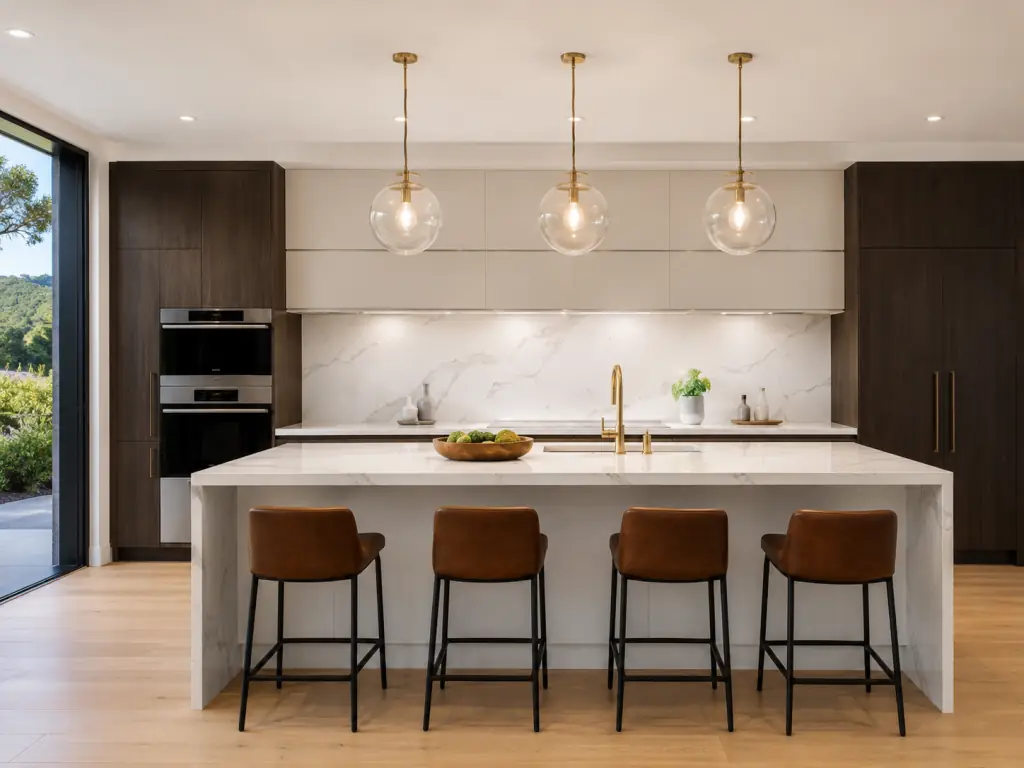
This is where the most money is misallocated before a sale. The distinction that matters is between a refresh and a remodel. A refresh corrects the elements a buyer instantly reads as obsolete—dated hardware, poor lighting, a tired cabinet finish, a damaged counter, a dated backsplash, worn plumbing fittings, un-serviced appliances—while retaining serviceable, high-quality cabinetry and a sound layout. A remodel replaces all of it.
The economics strongly favor the refresh. Zonda’s 2025 Cost vs. Value report put national cost recovery for a minor kitchen remodel at roughly 113%, against roughly 36% for an upscale major kitchen renovation. Installing an entirely new luxury kitchen immediately before selling is one of the clearest financial traps in pre-listing preparation—not only because the recovery is poor, but because a design-conscious buyer may well prefer to choose their own. Spend where the current kitchen is visibly deficient; stop before you rebuild something the market may not thank you for.
7. Correct the most visible bathroom deficiencies
Bathrooms should communicate cleanliness, material quality, good light, and calm. The high-return scope is targeted: fresh grout and caulk, updated fixtures and mirrors, better lighting, repaired cabinetry, clean glass, working ventilation, and replacement of conspicuously worn hardware. A dated but fully functional bathroom is often best left functional. National figures again favor restraint—a midrange bath remodel has historically recovered far more of its cost than an upscale gut renovation. The task is to remove objections, not to undertake a stone-and-millwork rebuild solely for resale.
8. Improve landscaping and outdoor living
In Clark County this matters more than almost anywhere, because the grounds are part of the proposition. Cleanup, pruning, tuned irrigation, tidy decks and patios, serviced outdoor kitchens, well-kept pools or spas, clean fencing, considered lighting, and a fire feature all read immediately. On acreage, the impression is set by the driveway and gate, the condition of fields and outbuildings, drainage, fencing, and thoughtful tree management. Research has associated well-landscaped homes with meaningfully higher perceived value than minimally landscaped ones—a preference signal, not a guaranteed resale premium, and worth treating as such. One firm rule: do not remove protected vegetation or disturb environmentally sensitive or critical areas to “improve” a view. In Clark County that can carry real regulatory consequences and should never be done without checking first.
9. Make the home’s systems feel maintained
Affluent buyers scrutinize expensive systems, and the goal here is rarely replacement—it is demonstrating predictable, well-documented ownership. HVAC and heat pumps, generators, smart-home and security systems, irrigation, water treatment, wells, septic, pools, radiant heat, elevators, EV charging, and any specialty mechanical equipment all benefit from recent service and a clean paper trail. Assemble maintenance records, manuals, invoices, permits, and service documentation into one organized package. A serviced system with a legible history removes an entire category of buyer anxiety, and it is far cheaper than the concession an undocumented, uncertain system tends to invite.
10. Fix the details buyers notice but sellers stop seeing
Finally, the small friction points that accumulate over years of ownership: loose handles, damaged screens, sticking doors, broken blinds, mismatched bulbs, cracked switch plates, damaged trim, missing hardware, a noisy fan, chipped paint, failed caulk, dirty vents, worn weather stripping. Individually, each is trivial. Collectively, they are the single clearest message a home sends about how it has been kept. Owners stop seeing them; buyers see nothing else. Correcting them is inexpensive and, dollar for dollar, among the most persuasive work you can do before photography.
The most valuable pre-listing dollars usually don’t build anything new. They remove the reasons a careful buyer hesitates.
Priority Matrix
A planning view, not a bid. Buyer impact reflects how strongly a well-prepared example tends to influence a discerning buyer; cost exposure is directional and varies widely by home, scope, and finish level.
Swipe table →
| Improvement | Typical priority | Buyer impact | Cost exposure |
|---|---|---|---|
| Deferred maintenance | Very high | Very high | Varies |
| Exterior & arrival | High | High | Low–Medium |
| Paint (cohesion) | High | High | Low–Medium |
| Flooring repair / refinish | High | High | Medium |
| Lighting correction | Medium–High | Medium–High | Low–Medium |
| Kitchen refresh | Medium–High | High | Medium |
| Full kitchen remodel | Low | Potentially high | Very high |
| Landscaping & grounds | High | High | Low–Medium |
| Mechanical servicing & documentation | High | High | Low–Medium |
| Detail corrections | High | Medium–High | Low |
Directional planning guidance for a fundamentally sound luxury property. An active roof leak, water intrusion, a failed HVAC system, an unsafe electrical condition, or a similarly material defect overrides the order above and moves immediately to first priority.
Repair, Refresh, Replace—or Leave It Alone?
When you are unsure what to do with a given feature, this is usually the fastest way to decide.
Swipe table →
| Condition | Best approach | Why |
|---|---|---|
| Broken or malfunctioning | Repair | Buyers read defects as risk and price them conservatively. |
| Worn but architecturally appropriate | Refresh | Preserve character while improving presentation. |
| Visibly dated and inexpensive to change | Consider replacing | Efficient way to modernize the impression. |
| Expensive but functional | Usually leave | The buyer may prefer to choose the replacement. |
| Highly personal or taste-driven | Evaluate carefully | Resale benefit is uncertain; it may not suit the next owner. |
| Protected, permitted, or sensitive | Verify first | Regulatory and permit consequences outweigh cosmetic gains. |
What You Probably Shouldn’t Renovate Before Selling
The point of this section is not to discourage improvement. It is to distinguish improvement that reliably repays from improvement that mostly transfers your taste onto a buyer who may not share it. Approach the following with real caution before listing: a full luxury kitchen replacement; a major bathroom gut renovation; a new pool; a highly personalized outdoor kitchen; an expensive whole-home smart ecosystem; converting bedrooms to specialty rooms; adding a wine cellar, home theater, or other narrow-use space; major additions; trend-driven finishes with a short shelf life; and expensive architectural changes.
The principle underneath all of them is simple. The closer a project gets to personal taste, the less certain its resale benefit becomes. National recovery figures reinforce this from the other direction—upscale, high-cost renovations consistently recover a smaller share of their cost than modest, corrective ones. Unless the current feature is a genuine competitive liability, capital spent personalizing a home right before sale is usually capital a buyer would rather have kept in the price.
Clark County: How Preparation Shifts by Property
Preparation is not uniform across the county, because the homes and their buyers are not. Below is how emphasis tends to shift by property type—offered as professional judgment, not as a claim about any neighborhood’s values.
Camas
Custom, hillside & view homes
Custom construction, hillside and view properties, and newer luxury developments reward protecting sightlines, disciplined exterior and deck condition, and lighting that flatters architecture. See the Camas overview.
Ridgefield
Newer construction & acreage
Newer homes, large lots, and acreage put the emphasis on grounds, driveways, fencing, and making a large property read as maintained rather than sprawling. See Ridgefield.
Brush Prairie / Hockinson
Acreage, shops & systems
Acreage with shops and barns makes wells, septic, gates, fencing, drainage, and outbuilding condition central—documentation matters as much as appearance. See Brush Prairie.
Felida / Lake Shore
Established luxury neighborhoods
In settled upscale areas, updating older finishes can matter differently—selective modernization of dated elements, weighed against a home’s established character. See Felida.
Vancouver Waterfront
Condominiums & views
For waterfront condominiums, interior finishes, lighting, flooring, windows, views, HOA considerations, and building systems often matter more than exterior work.
Evergreen Hwy / Columbia River
View, drainage & outdoor living
Along the Columbia River corridor, view preservation, drainage, windows, decks, and the presentation of outdoor living areas carry unusual weight.
Across all of them, one idea holds. In luxury real estate, consistency often matters more than novelty. A home where architecture, materials, landscaping, lighting, fixtures, and finishes feel intentional can outperform one carrying expensive improvements that do not belong together. An isolated ultra-modern kitchen dropped into a traditional home is the classic example—the individual finishes may be excellent, yet the result reads as incoherent, and coherence is much of what a luxury buyer is paying for.
A Composite Scenario
Consider an owner weighing a $150,000–$200,000 kitchen-and-primary-bath renovation before listing. After walking the property and thinking about its likely buyer, the plan is redirected: refinish the hardwood floors, repair exterior trim, improve the landscaping and arrival sequence, service the HVAC and assemble its documentation, correct the lighting, repaint selected areas, make targeted kitchen updates rather than a full replacement, and invest in professional staging and photography.
The reasoning is capital allocation. The same budget—or a fraction of it—spread across corrections a buyer will actually register, rather than concentrated in one expensive renovation the next owner might redo, tends to position the home more effectively. That is the argument for evaluating before spending. It is not a promise of a particular return.
Composite scenario for illustration — not a specific transaction
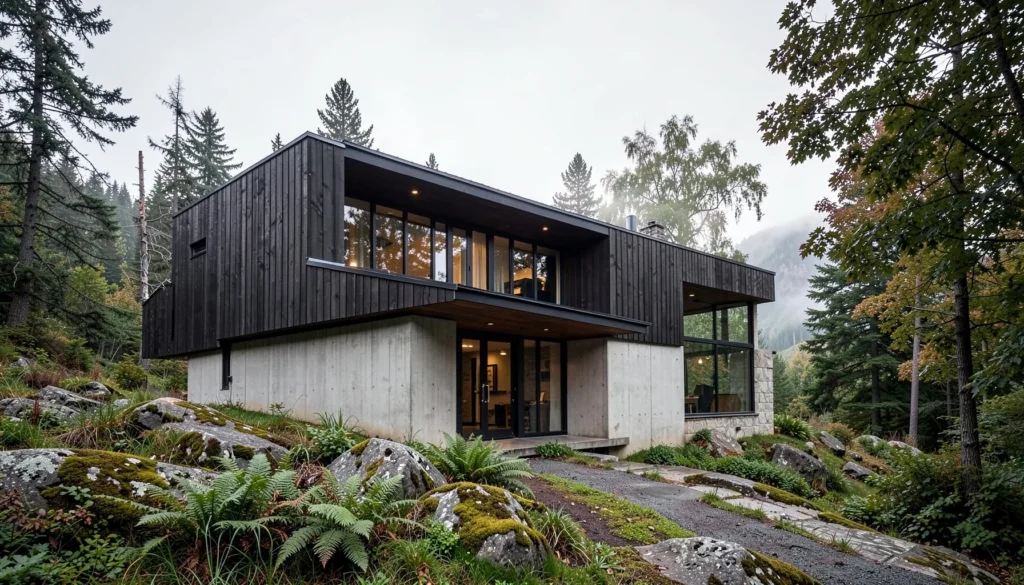
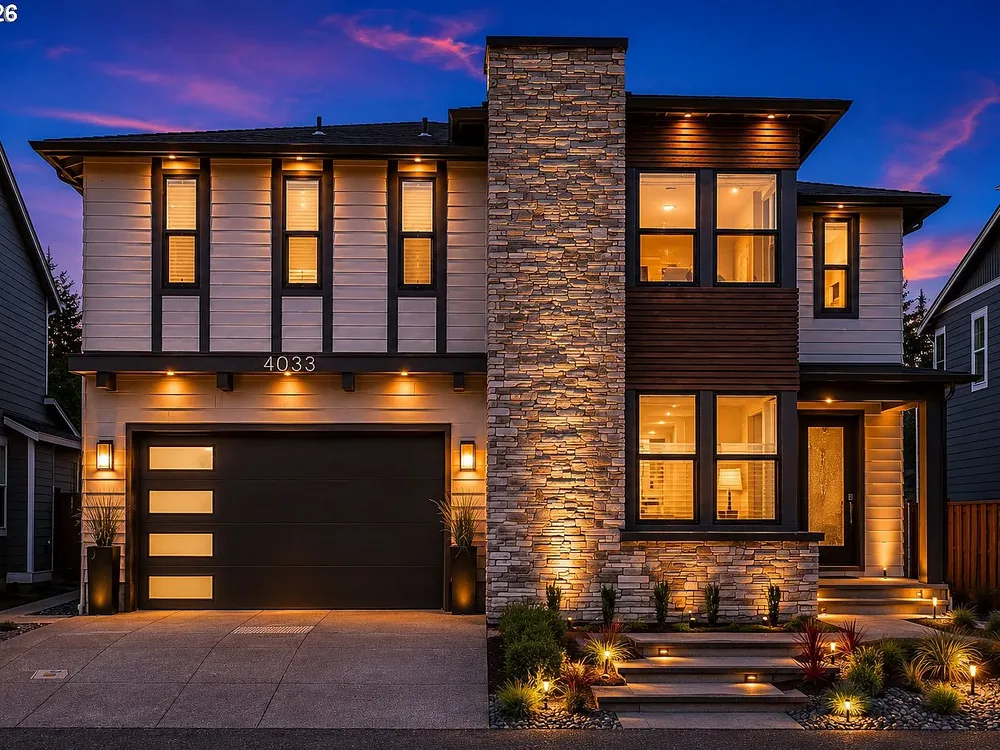
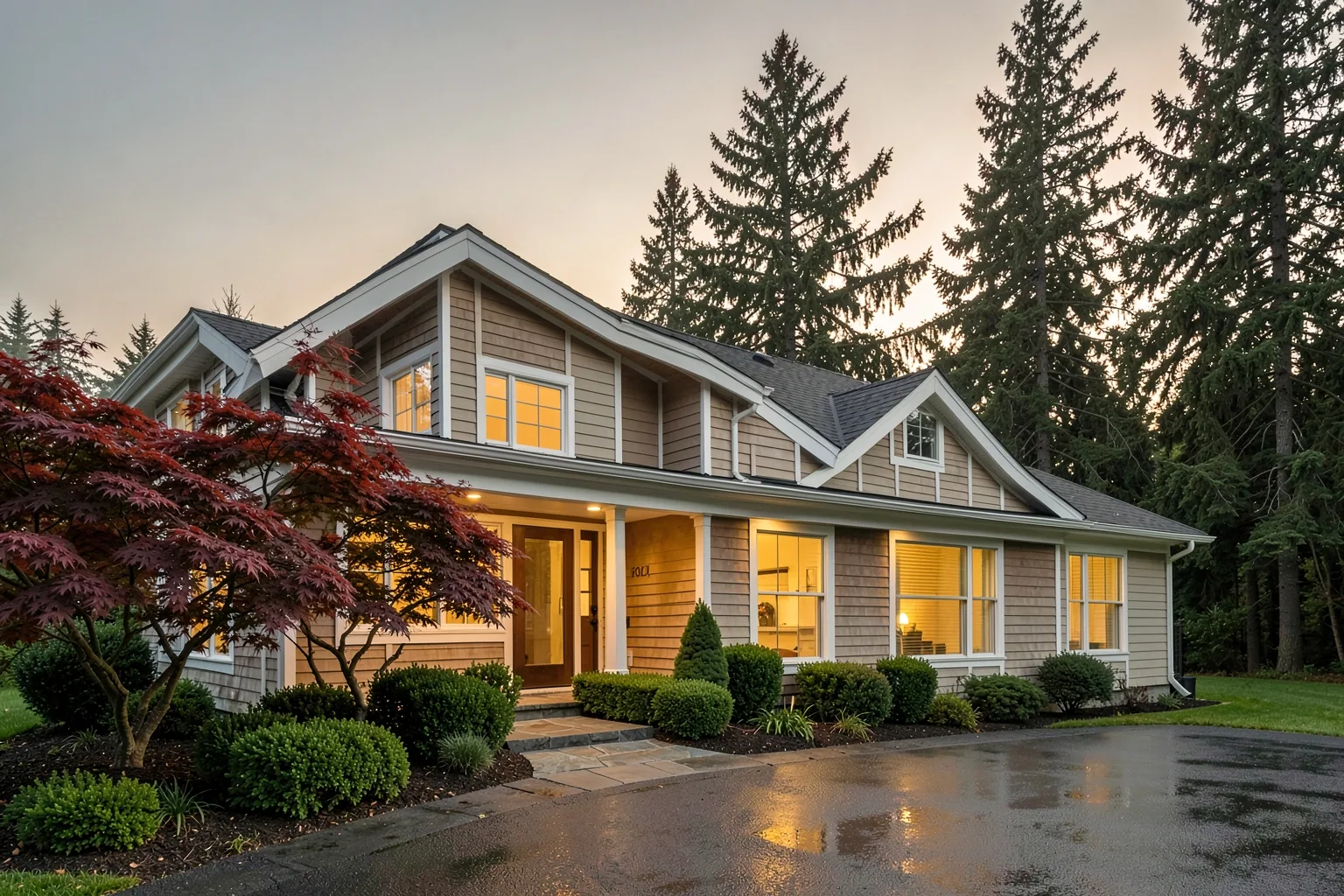
The figures and choices above are a composite constructed to illustrate capital allocation. They do not describe an actual property, sale price, or profit, and no specific outcome is implied. Photography is representative Pacific Northwest imagery and does not depict a specific property or listing unless expressly identified.
Before Spending Money on Your Home
A short set of questions to run any candidate project through before you commit to it.
- Is this a defect a buyer will actually notice—or something only you see?
- Is this maintenance and correction, or is it personal preference?
- Does the improvement fit the home’s architecture?
- Will it materially improve the photography or the showing?
- Is the existing feature still functional?
- Would the likely buyer prefer to choose the replacement themselves?
- Is the improvement appropriate for this home’s probable buyer?
- Is there a less expensive way to remove the same objection?
- Does the project require permits—and can it be completed properly before photography?
- Will it be finished to a professional standard, or will it read as unfinished?
The preparation budget should be set after evaluating the specific property and its likely buyer—not assembled from a generic remodeling checklist. Timing follows the same logic; where marketing sequence is concerned, our note on why the first 10–14 days on market matter explains why the work should be complete before the home is ever photographed.
Verify It Yourself · Official Sources
- Clark County building permits — permit requirements and history.
- Clark County Assessor — property records and characteristics.
- Clark County Public Health — on-site septic systems, and Washington State Department of Health guidance on testing private well water.
- City of Vancouver, City of Camas, and City of Ridgefield permitting.
- NAR Profile of Home Staging and the NAR/NARI Remodeling Impact Report.
- Zonda 2025 Cost vs. Value Report — national and regional remodeling cost-recovery benchmarks.
Related Reading
Preparing a Luxury Home for Market
Staging, photography, pricing, and launch strategy—the presentation layer that follows the physical preparation described here.
Pricing Strategy: Why the First 10–14 Days Matter
Why a finished, well-prepared home and a disciplined price in the opening window do most of the work of a strong sale.
Before you renovate, decide what actually matters
If you are considering selling a distinctive Clark County property, the best time to evaluate improvements is before contractors are hired. A pre-list consultation can identify what is worth correcting, what should be left alone, and where preparation is most likely to improve the home’s position in the market.
A note on the figures
Cost-recovery and staging percentages cited here are national benchmarks from the National Association of Realtors and Zonda’s Cost vs. Value report. They describe broad U.S. residential patterns and the general direction of returns—not Clark County luxury-property outcomes specifically—and should be read as planning guidance rather than a promise of return on any individual home. Verify current program details, permit requirements, and any property-specific facts with the official sources above before acting.