Market · Clark County Comparison
What $1 Million Buys in Clark County: Camas vs. Ridgefield vs. Vancouver vs. Brush Prairie
A million-dollar budget does not buy the same lifestyle across Clark County. Move fifteen or twenty minutes, and the tradeoff between house size, land, age, location, schools, amenities and development changes substantially.
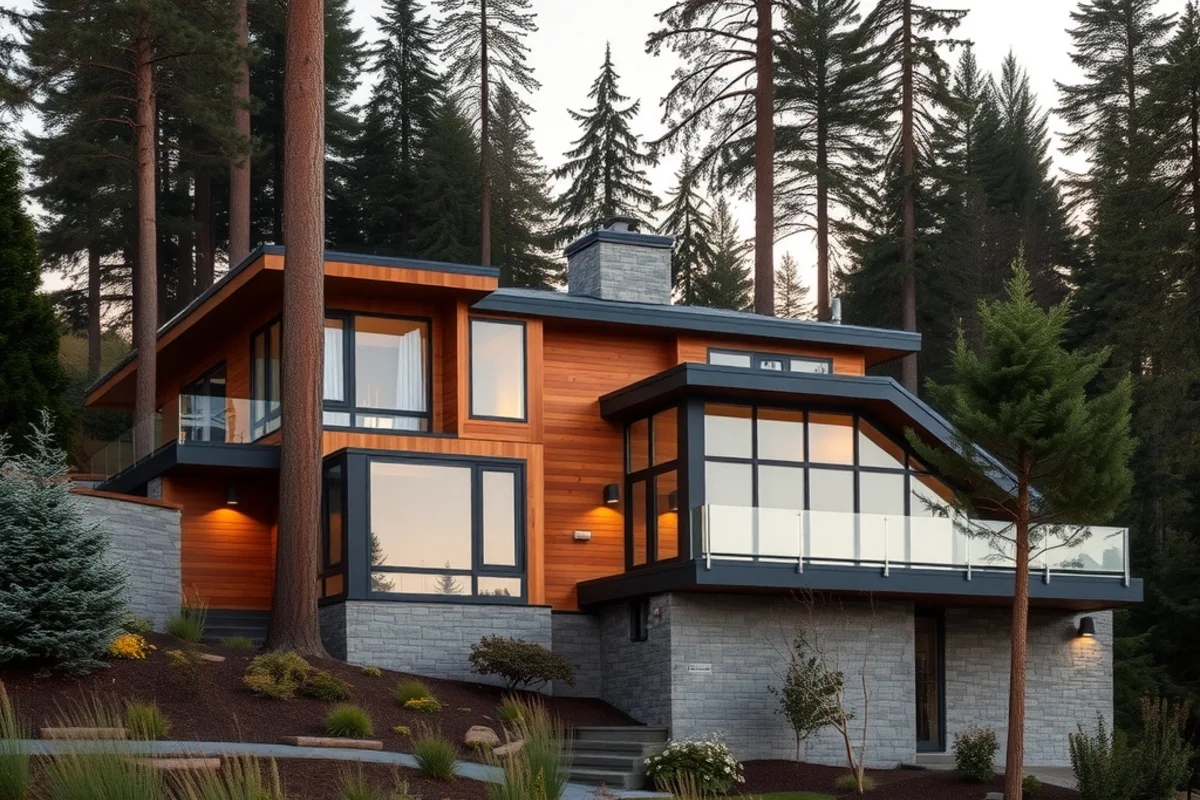
Buyers arrive at the one-million-dollar level in Clark County expecting to compare houses. What they are actually comparing is a set of tradeoffs—and those tradeoffs shift sharply over short distances. The same budget that buys an established home on a quarter-acre in Camas can buy roughly four thousand finished square feet in Ridgefield, five acres with a workshop in Brush Prairie, or a large newer house in east Vancouver with meaningfully different access to Portland.
None of those outcomes is objectively better. They are different products, and the buyer who treats them as interchangeable usually ends up paying for something they did not particularly want. A citywide median price cannot resolve this, because a median describes an entire housing market—most of which sits well below a million dollars.
What follows compares four Clark County markets on the same basis, using a targeted sample of current listings in the $900,000 to $1.1 million band alongside recent closed sales, all as of the research date of August 27, 2026. The question is narrow and practical: if you have approximately one million dollars to spend, what materially changes depending on where you spend it?
At a Glance
Before the detail, the short version. Each of these four markets is the strongest starting point for a specific priority.
Swipe table →
| If your priority is | Strongest fit | Why, in the sample |
|---|---|---|
| Maximum finished living space | Ridgefield | Median current example of about 4,034 sq ft at the lowest sampled asking price per square foot |
| Acreage, shop or ADU utility | Brush Prairie | Median current lot of 5.00 acres; acreage is a core product here, not an outlier |
| Established upscale setting and recreation | Camas | Mature neighborhoods, Lacamas Lake and trail network, strongest school-rating examples in this comparison |
| Vancouver/Portland access and property flexibility | Vancouver | Shortest published drive to downtown Portland; newly effective zoning adds land-use optionality |
| New construction around $1M | Ridgefield / Brush Prairie | 2026-build examples were present in both markets at the research date |
| True waterfront at exactly $1M | No clear leader | No property clearly marketed as true waterfront appeared among the twelve primary current examples |
These findings describe the roughly $900,000–$1.1 million price band specifically. They are not conclusions about each city’s entire housing market, and they should not be read as such.
Why Citywide Median Prices Don’t Answer This Question
A citywide median is a useful number for a very different question. It summarizes an entire market—starter homes, mid-range subdivisions, condominiums and estates together—and the resulting figure mostly describes housing well below the million-dollar level. Asking a citywide median what a million dollars buys is asking it to answer a question it was never built to answer.
So this comparison was built the other way around: start at the budget, then look only at what that budget actually reaches.
Price band
Approximately $900K–$1.1M
A window centered on one million dollars, wide enough to capture real inventory and narrow enough that every property compared is genuinely a million-dollar decision.
Equal sampling
Three current listings per market
The same number of representative current listings in each of the four markets, so that price per square foot, home size, lot size and year built are compared on a consistent basis.
Reality check
Recent closed sales
Asking prices show what sellers want. Closed sales from the preceding twelve months show what buyers actually paid, and are used here to test whether the listing picture holds up.
Sources
Public MLS feeds and official records
Property examples come from public MLS-feed listing portals. Tax, planning and municipal information comes from Clark County and city sources directly.
This is a targeted buyer-side market screen, not a complete broker-exported CMA. That distinction is stated plainly here and again in the methodology note at the end, because the difference matters when you are about to write an offer.
The $1 Million Clark County Comparison
Compared on identical terms, the four markets separate immediately.
Swipe table →
| Market | Median asking $/sq ft | Median home size | Median lot | Median year built | Typical product |
|---|---|---|---|---|---|
| Camas | $282 | 3,196 sq ft | 0.24 ac | 1997 | Established upscale detached home; occasional unusual or double-lot property |
| Ridgefield | $235 | 4,034 sq ft | 0.44 ac | 1995 | Large square footage, new construction, or acreage |
| Vancouver | $264 | 3,978 sq ft | 0.26 ac | 2004 | Large suburban detached home; urban multifamily is an alternative |
| Brush Prairie | $371 | 2,695 sq ft | 5.00 ac | 2014 | Acreage property or smaller high-specification new build |
Figures are medians of three representative current listings per market within the stated band, calculated on the same basis for all four markets. They are sample statistics, not citywide statistics.
Read the table as a description of what the money is being spent on, rather than as a ranking. Ridgefield’s low asking price per square foot and Brush Prairie’s high one are not a verdict about construction quality. They reflect what dominates each purchase: in Ridgefield, finished interior space; in Brush Prairie, land and site improvements that a per-square-foot figure does not price at all.
Camas and Vancouver sit closer together on land—roughly a quarter-acre in both samples—but diverge on age and size. The Vancouver examples are generally newer and larger; the Camas examples are generally older and smaller, with the budget going toward setting and location instead.
The four markets are not four prices for the same product. They are four different products that happen to cost about the same.
Camas: Paying More for Setting, Recreation and Established Neighborhoods
In the Camas sample, one million dollars generally buys an established home of roughly 3,100 to 3,300 finished square feet on about a quarter-acre, built in the late 1990s or early 2000s. That is meaningfully less interior space than the same budget reaches in Ridgefield or Vancouver, and a fraction of the land it buys in Brush Prairie.
What it buys instead is context. These are mature neighborhoods with established landscaping and settled streets, positioned close to an unusually tangible recreation network. The City of Camas describes the Heritage Trail along Lacamas Lake as a continuous nature corridor, with additional paved and unpaved trails through Lacamas and Lacamas Creek parks, and the historic downtown adds a walkable commercial core that most Clark County suburbs do not have.
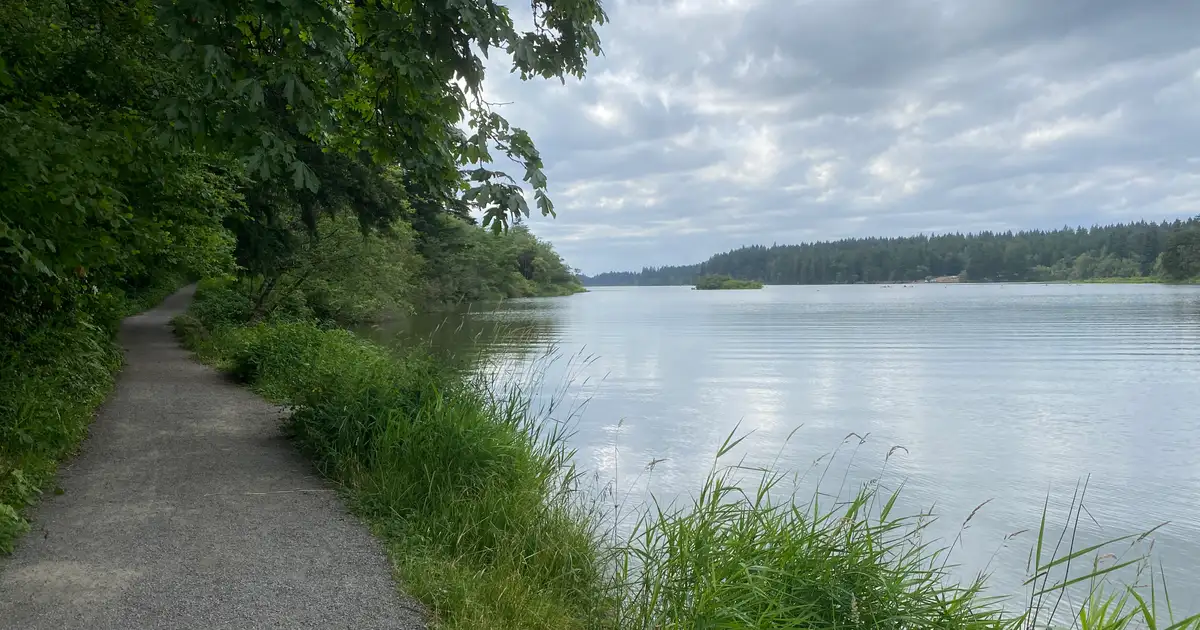
Two representative Camas listings from the research-date sample show the pattern:
2709 NW 9th Ave
Listed at $1,075,100 · as of Aug. 27, 2026
- Size
- 3,878 sq ft, 3 bed / 3 bath
- Lot
- 10,454 sq ft (0.24 ac)
- Built
- 1992
- HOA
- None shown
A large established home with a three-car garage. Reported 2025 property tax of approximately $7,151.
3647 NW Orchard Ct
Listed at $900,000 · as of Aug. 27, 2026
- Size
- 3,196 sq ft, 5 bed / 3.5 bath
- Lot
- 0.25 ac
- Built
- 1997
- HOA
- Approximately $34/month
A conventional established subdivision home at the lower edge of the band, and the median-size example in the Camas sample.
Research-date examples. Listing status and price were accurate to the public feeds on August 27, 2026 and must be re-verified before any offer.
A third Camas example, 2445 NW 29th Ave, is instructive precisely because it breaks the pattern: a smaller 2,231-square-foot home built in 2001 on an 8,712-square-foot lot plus an adjacent lot. The additional land changes the property’s economics entirely, which is why it pulls the Camas sample’s average price per square foot ($336) so far above its median ($282). One unusual property can distort a small sample, and it is worth naming when it does.
On schools, the Camas examples are the strongest in this comparison: Camas High currently carries a 10/10 GreatSchools rating, with Odyssey and Skyridge middle schools at 8/10 and strong elementary examples. These are GreatSchools ratings, not district-issued rankings, they change over time, and assignment depends on the specific address.
The honest summary: in Camas, more of a million-dollar budget is allocated toward location, established neighborhood context, recreation access and local amenities than toward maximizing acreage or raw square footage. That is a premium some buyers are glad to pay and others should not. It also is not universal—not every Camas property at this price carries the same premium, and a property with a special land or view component can behave quite differently. Our Camas community overview covers the neighborhoods in more depth.
Ridgefield: The Most House and the Widest Product Choice
Ridgefield is where a million dollars stops meaning one thing. In the research-date sample, the same budget reached three properties with almost nothing in common except price.
2130 S 26th Ave
Listed at $950,000 · as of Aug. 27, 2026
- Size
- 4,051 sq ft, 4 bed / 3 bath
- Lot
- 0.44 ac
- Built
- 1995
- HOA
- Approximately $44/month
A very large established subdivision home—the maximum-square-footage path at this budget.
3800 S 16th Way #L5
Listed at $999,000 · as of Aug. 27, 2026
- Size
- 3,056 sq ft, 5 bed / 4 bath
- Lot
- 8,712 sq ft (0.20 ac)
- Built
- 2026
- HOA
- Not fully surfaced publicly
New construction. Less land and less space than the 1995 home, in exchange for a brand-new house.
20200 NE 50th Ave
Listed at $949,900 · as of Aug. 27, 2026
- Size
- 4,034 sq ft, 4 bed / 2.5–3 bath
- Lot
- 4.77 ac
- Built
- 1950
- HOA
- None shown
An older large home on nearly five acres—an acreage path that also exists inside Ridgefield.
Research-date examples, accurate to the public feeds on August 27, 2026. Verify current status and price before relying on any of them.
A 1995 subdivision house, a 2026 new build and a 1950 farmhouse on 4.77 acres—all within about $50,000 of each other. For a buyer, that breadth is the point. In the other three markets, a million dollars tends to steer toward one dominant product type. In Ridgefield it does not, which means the decision stays genuinely open longer.
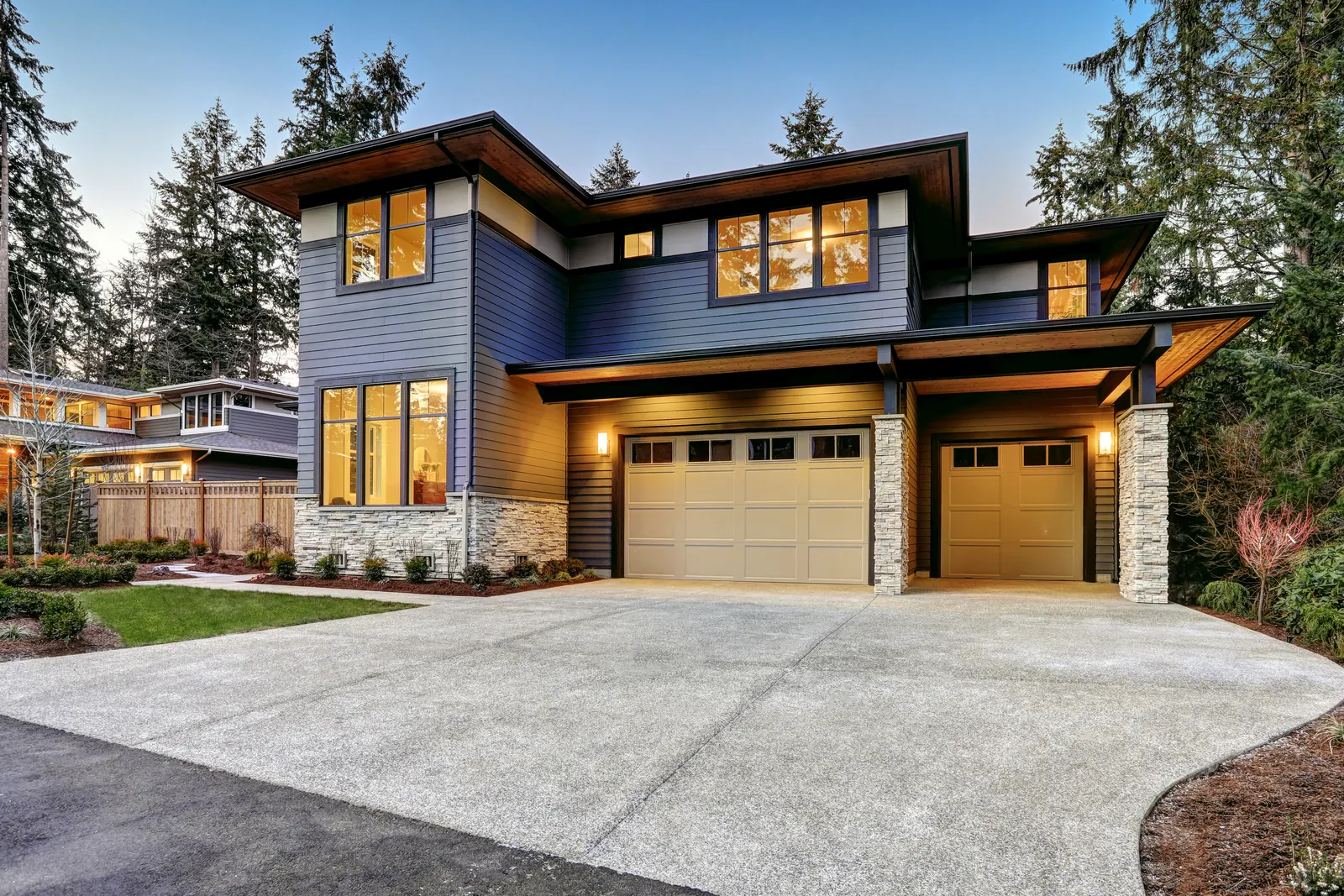
Do Not Generalize the $235 Figure
Ridgefield’s sampled median asking price of $235 per square foot is the lowest of the four markets—and it is heavily influenced by two very large properties, including the 1950 acreage home. It describes this three-property sample. It should not be applied to Ridgefield new construction, where a smaller, brand-new house at a similar total price produces a materially higher figure. The 2026 build in the same sample is the clearest illustration.
The development tradeoff
Ridgefield is the strongest growth-and-new-supply story of the four markets, and that cuts both ways. Beginning in 2026, the city’s Planning Commission identifies adoption and implementation of Envision Ridgefield 2045 as a primary focus, and the city is adding infrastructure including a 2.5-million-gallon elevated eastside water reservoir intended to increase storage, pressure and fire-flow capacity. The setting itself—the National Wildlife Refuge, waterfront and small downtown—is a genuine amenity.
The benefit is more newer housing and more planned-community options at this budget than a mature market can offer. The tradeoff is more active construction, more neighborhood evolution, more infrastructure work and more competing future supply than in a settled Camas subdivision. Which of those matters more depends entirely on the buyer’s horizon. That is an interpretation of the city’s published planning and infrastructure program, not a price forecast. If new construction is the likely path, the new construction guide covers what to negotiate with builders, and the Ridgefield community overview covers the submarkets.
Vancouver: Access, Flexibility and Different Ways to Spend $1 Million
Vancouver is structurally different from the other three because it is a full city rather than a suburb or a rural center. That shows up in two ways at this budget.
The first is conventional and consistent. The representative east and northeast Vancouver detached homes in the sample deliver roughly 3,400 to 4,000 square feet on lots of about 0.25 to 0.29 acre, and are generally newer than the Camas examples—a 2002 six-bedroom on NE 13th Circle at $1,050,000, a 2004 home of 4,020 square feet on NE 146th Avenue at $1,049,000, and a 2018 home of 3,438 square feet on NE 52nd Avenue at $999,000 with an advertised mountain view. Large garages are common; three-car capacity appears repeatedly.
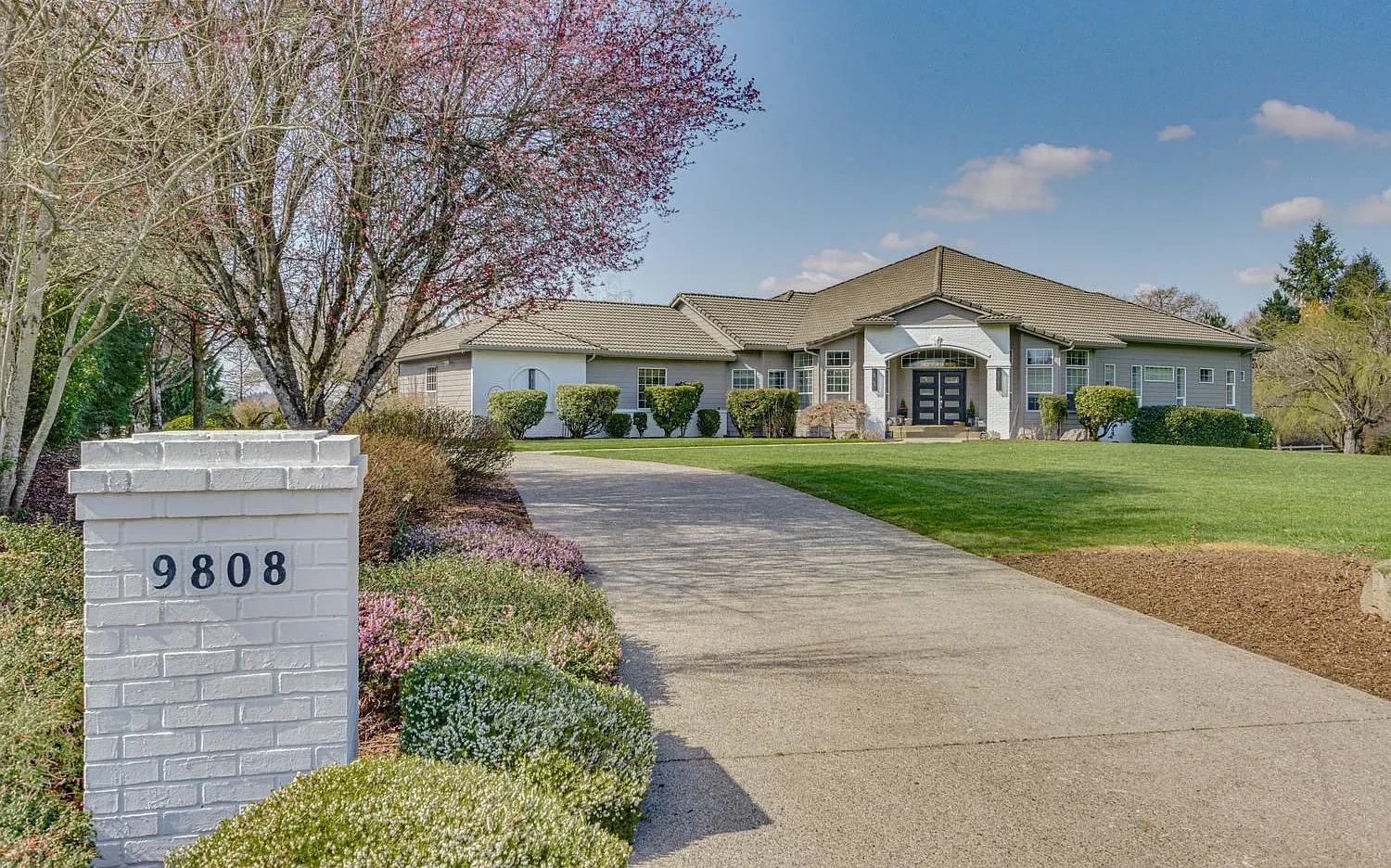
The second is not conventional at all. Downtown, the same capital can buy a fundamentally different asset class. At the research date, 504 W Evergreen Blvd was indexed at $950,000 for a seven-unit property—2,790 square feet on a 5,227-square-foot lot, built in 1910, near Esther Short Park and the Farmers Market. That is small multifamily investment real estate, not a luxury detached home, and it is a real option at this budget for a buyer who wants one.
Vancouver also offers the strongest urban amenity package of the four: the Vancouver Waterfront Park, Esther Short Park, the widest range of restaurants and events, and the deepest set of urban services. Downtown Vancouver is roughly a 13-minute published off-peak drive from downtown Portland—materially shorter than the center-to-center estimates for the other three markets.
The land-use angle
Vancouver is also undergoing the most consequential regulatory change of the four. The City Council adopted the Our Vancouver 2026–2045 Comprehensive Plan and updated zoning on June 1, 2026, effective July 31. The city projects 81,000 additional residents by 2045 and states it needs at least 38,000 more homes and 43,000 more jobs; the new zoning is explicitly intended to provide greater flexibility and more housing options.
For a buyer thinking beyond the current use of a house, that makes certain Vancouver parcels worth deeper investigation—accessory dwelling units, middle housing, redevelopment potential, or simple investment flexibility. But the caveat is not decorative:
Development potential is parcel- and zoning-specific. A citywide zoning update does not mean any particular million-dollar Vancouver house can be redeveloped.
That question is answered by the parcel’s actual zoning designation, its overlays and its constraints—not by the plan’s headline. Current inventory is on the Vancouver and Clark County listings page.
Brush Prairie: Where the Budget Turns Into Land
Brush Prairie is the most dramatic departure from the other three. It is not an incorporated city—Clark County identifies Brush Prairie and Hockinson within its Rural Centers framework—and that governing difference is precisely why a million dollars still reaches five acres here while urban Camas and Vancouver examples cluster around a quarter-acre.
Two of the three current examples in the sample sit on 5.00 and 5.65 acres. The third is 2026 new construction on a conventional 0.23-acre lot at $950,000—the alternative path, trading land for a brand-new smaller house of 2,505 square feet.
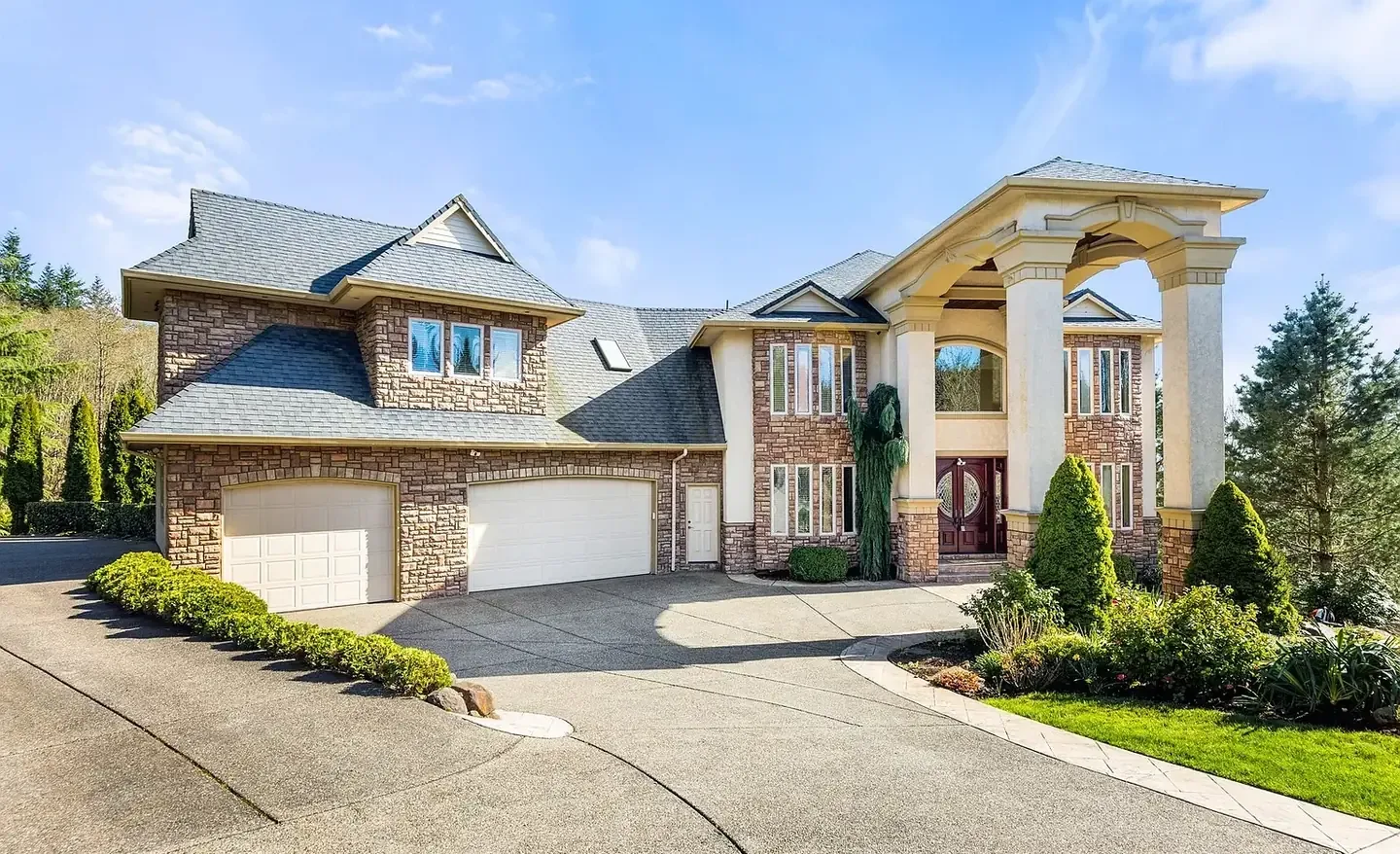
What that acreage can actually contain is best shown by a closed sale rather than an asking price. 15308 NE Bonanza Rd sold for $998,000 on June 10, 2026—3,444 square feet on 5.1 acres, and the MLS record explicitly included an accessory dwelling unit and guest quarters, a workshop, an additional outbuilding, RV and boat storage, a second garage totaling five garage spaces, a stream and a wooded setting. It also carried a modest $160-per-year road-maintenance association rather than a conventional subdivision HOA.
That single record is the clearest answer to why Brush Prairie’s sampled asking price per square foot ($371) is the highest of the four markets. It is not evidence that the houses are intrinsically more expensive. Far more of the purchase price is buying things a per-square-foot calculation never touches:
Not in the $/sq ft
Land
Five acres against a quarter-acre is not a marginal difference in lot size. It is a different category of ownership, with different maintenance and different use.
Not in the $/sq ft
Privacy and setting
Wooded and territorial settings, greenbelt frontage and distance from neighbors carry real value that no interior measurement captures.
Not in the $/sq ft
Auxiliary structures
Shops, outbuildings, guest quarters and additional garages are functional square footage that sits outside the finished-living-area figure.
Not in the $/sq ft
Site improvements and storage
Driveways, utility service, drainage work, and RV, boat and multi-vehicle capacity represent substantial invested cost on an acreage parcel.
A buyer comparing a 2,695-square-foot Brush Prairie home on 5.65 acres against a 4,051-square-foot Ridgefield home on 0.44 acre using price per square foot alone is not really comparing the two properties at all.
Acreage Buyers Should Verify
The gap between two superficially similar acreage properties is usually hidden in this list. Nothing here should be assumed from a listing photograph.
- Zoning and the permitted uses of the parcel
- Septic system type, condition, capacity and permit records
- Well versus public water—confirmed at the parcel, not assumed from the area
- Critical areas and wetlands designations affecting buildable area
- Private roads, road-maintenance agreements and cost-sharing obligations
- Current-use taxation classifications and the consequences of removal
- Legal status of shops and outbuildings—permitted, or merely present
- ADU legality under current county rules for that specific parcel
- Permit history, access, easements and recorded encumbrances
An improvement existing on a property is not evidence that it was legally permitted. That question has to be answered from records.
Further reading: the Brush Prairie & Hockinson community overview, the waterfront and acreage guide, and a previous Journal piece on the quiet case for acreage in Brush Prairie.
Same $1 Million, Very Different Land
If one visual explains this entire comparison, it is lot size. These are the median lots from the current sample in each market, drawn to the same scale.
Established suburban lot
Suburban lot — or an urban property of a different type entirely
Subdivision, large lot or acreage — the sample also included a 4.77-acre property
Acreage-dominant — roughly twenty times the Camas median lot
Median lot of three representative current listings per market, $900K–$1.1M band, research date August 27, 2026. Bars are drawn to linear scale against the 5.00-acre maximum.
Camas and Vancouver cluster tightly around a quarter-acre. Ridgefield sits between the categories and spans the widest range of any of the four. Brush Prairie is not a variation on the suburban lot—it is a different category of property, and the chart makes the point faster than any paragraph can.
What Recent Closed Sales Tell Us
Asking prices describe what sellers want. Closed sales describe what buyers agreed to. Testing the listing picture against recent transactions is what keeps this from being a survey of optimism.
Swipe table →
| Area | Sold for | Sq ft | $/sq ft | Notable trait |
|---|---|---|---|---|
| Camas — 1918 NW 45th Ave | $950,000 | 2,316 | $410 | Sold Jul. 27, 2026; smaller home, high $/sq ft in an established setting |
| Camas — 2109 NW Couch St | $1,066,500 | 4,064 | $262 | Large home; close date not exposed in the public index |
| Ridgefield — 5915 NW 289th St | $1,050,000 | 3,149 | $333 | Sold May 18, 2026 |
| Ridgefield — 19006 NE Delfel Rd | $1,050,000 | 2,609 | $402 | Sold Aug. 7, 2026; same price, far less interior space |
| Vancouver — 1400 NE 146th Ave | $950,000 | 3,410 | $279 | Sold Jul. 27, 2026; private setting |
| Vancouver — 17401 NE Fourth Plain Rd | $950,000 | 2,199 | $432 | Sold Aug. 11, 2026; highest sampled $/sq ft of any closed sale here |
| Vancouver — 4307 NE 142nd St | $950,000 | 3,673 | $259 | Sold Mar. 31, 2026; same price as the two above, far more interior space |
| Brush Prairie — 12520 NE 246th Ct | $1,000,000 | 4,542 | $220 | Sold Jan. 9, 2026; lowest sampled $/sq ft — large home |
| Brush Prairie — 15308 NE Bonanza Rd | $998,000 | 3,444 | $290 | Sold Jun. 10, 2026; 5.1 acres, ADU, workshop, RV/boat storage, five garage spaces |
| Brush Prairie — 4606 SE 17th Ct | $1,010,000 | 3,140 | $322 | Sold Sep. 12, 2025 |
Selected examples, not a complete transaction set. The two Camas records above appeared in a public recently-sold index that did not expose exact close dates; they are useful as comparables but are the weakest timestamped records in this group.
Look at what happens inside each market. Ridgefield’s closed examples run from roughly $333 to $402 per square foot. Vancouver’s run from $259 to $432. Brush Prairie’s run from $220 to $322. Two homes in the same city, closing within weeks of each other at nearly identical prices, can differ by more than fifty percent on a per-square-foot basis.
That spread is not noise. It is acreage, views, newness, condition, micro-location, garage capacity, auxiliary structures and site improvements—every one of them a real value driver that a single division problem cannot see.
Price per square foot is useful context—not a standalone valuation method.
It is a reasonable first filter and a poor final answer. At this price tier especially, the variables it excludes are frequently the ones the buyer is actually paying for.
Schools and Amenities
School information deserves precision rather than shorthand. The figures below are current GreatSchools ratings—a third-party rating, not a district-generated ranking. They change over time, and school assignment is determined by the specific property address, not by the city name on the listing.
Swipe table →
| Area | GreatSchools rating examples | Amenity context |
|---|---|---|
| Camas | Camas High 10/10; Odyssey and Skyridge middle schools 8/10; strong elementary examples | Lacamas Lake and Lacamas Park, Heritage Trail, Lacamas Creek trails, historic downtown |
| Ridgefield | Ridgefield High 7/10; Union Ridge Elementary 9/10; South Ridge 8/10; View Ridge Middle 6/10 | Ridgefield National Wildlife Refuge, waterfront setting, small downtown shops and restaurants, parks |
| Vancouver | Highly neighborhood-dependent. Columbia River, Mountain View and Skyview high schools each currently 6/10; Alki Middle 8/10 | Vancouver Waterfront, Esther Short Park, restaurants and events, strongest urban services |
| Brush Prairie | In a representative Hockinson assignment: Hockinson High 8/10, Hockinson Middle 9/10, Hockinson Heights Elementary 6/10 | Lower-density rural setting, acreage, Hockinson-area recreation |
Two cautions matter more than the numbers themselves.
Vancouver requires the most address-specific diligence of the four, because the city spans both Vancouver Public Schools and Evergreen School District territory, and ratings vary substantially by neighborhood. Two Vancouver houses at the same price can carry entirely different assignments.
Not every Brush Prairie address is Hockinson. The Hockinson ratings above come from one specific MLS record—15308 NE Bonanza Rd—that explicitly assigned Hockinson schools. Other Brush Prairie parcels fall into different districts, including Battle Ground. Camas properties are served by Camas School District and Ridgefield properties by Ridgefield School District, but boundaries within any district should still be confirmed against the district’s own attendance-area resources for the exact address.
On amenities, the four markets are genuinely different rather than better or worse. Camas offers the most integrated lake-and-trail recreation network with a historic walkable downtown. Ridgefield pairs the National Wildlife Refuge with a waterfront setting and a small downtown. Vancouver has the deepest urban package—waterfront district, central parks, restaurants, events and services. Brush Prairie offers a lower-density setting with acreage and Hockinson-area recreation.
Commute and Access
The figures below are published center-to-center, off-peak route estimates. They are useful for ranking the markets against one another. They are not rush-hour guarantees, and they are not property-level commute times.
Swipe table →
| From | To downtown Vancouver | To downtown Portland |
|---|---|---|
| Camas | ~19–21 min | ~24–25 min |
| Ridgefield | ~19 min | ~32 min |
| Vancouver (downtown) | City center itself | ~13 min |
| Brush Prairie | ~15 min | ~27 min |
Center-to-center published estimates. The Vancouver listings in this comparison are largely east and northeast Vancouver properties, so the zero-minute downtown benchmark is a city-center reference point, not a commute estimate for those homes.
The ranking is informative: downtown Vancouver is meaningfully closer to Portland than the other three, and Brush Prairie is closer to Vancouver than Camas or Ridgefield despite feeling considerably more rural. But a citywide figure should never be applied to an individual house. A Ridgefield acreage property off a rural road and a Ridgefield subdivision home near the interstate can differ by ten or fifteen minutes before traffic is considered at all.
The only reliable version of this number is the one you generate yourself. Drive the actual route from the actual property at the actual hours you expect to travel—in both directions, on a weekday. It is an afternoon of effort against a decision measured in years.
Property Taxes: Compare the Parcel, Not Just the City
Property tax is where city-level generalizations do the most damage. Washington levies are assessed per $1,000 of taxable value, and Clark County states plainly that an individual bill reflects the specific taxing districts applicable to that parcel.
The 2026 components most relevant to these four markets illustrate why:
Swipe table →
| Area | Municipal levy | Primary school levy | Why the city number misleads |
|---|---|---|---|
| Camas | $2.4817 | Camas SD $3.2717 | City plus school alone is roughly 0.575% before state, county, library, port and district levies |
| Ridgefield | $0.5800 | Ridgefield SD $3.5180 | A low city levy, but fire, EMS and other districts still apply |
| Vancouver | $3.7700 | Vancouver SD $3.5187 or Evergreen SD $3.9305 | Highest municipal component of the four, and the school district depends on the address |
| Brush Prairie | No incorporated-city levy | Hockinson SD $2.2915 or Battle Ground SD $0.4507 | Unincorporated tax code areas can include County Roads and fire-district levies |
Selected components only. Clark County also publishes two state components at $1.4443 and $0.7786 per $1,000; county general and smaller county-wide levies adding roughly another $0.74; Fort Vancouver Regional Library and its capital levy totaling $0.5948; County Roads at $0.9843; and separate fire, EMS, port and other special-district rates.
Add those together and a statement like “Camas taxes are X percent” stops being a shortcut and becomes a wrong answer. The actual bill depends on the parcel’s assessed value and its tax-code area—which bundles city or unincorporated status, school district, fire district, EMS district, county levies, library, port, roads where applicable, and any exemptions or classifications the property carries.
Real listings make the point better than arithmetic. The Camas NW 9th property reported approximately $7,151 in 2025 property tax. The Vancouver home at 1200 NE 146th Ave reported approximately $10,072. The Brush Prairie property at 12520 NE 246th Ct carried $12,191 in 2026 tax on a $1.469 million assessment despite selling for $1,000,000—while 15308 NE Bonanza Rd reported only $3,126 against a much higher market value. Assessment history, exemptions and classification produce differences of that magnitude between properties in the same county.
Verify the Parcel Directly
The correct due-diligence metric is the parcel’s tax-code-area total, not a city levy multiplied by purchase price. Look up the specific property through the Clark County Property Information Center, and review current rates through the Clark County Treasurer. Nothing here is tax advice; for treatment of a specific situation, consult a qualified tax professional.
HOA: More About the Property Than the City
At this price level, homeowners associations are common but far from universal—and their presence tracks the subdivision, not the city.
In the current sample, Camas showed two listings with roughly $34 to $37 monthly dues and one with no HOA. Brush Prairie likewise showed two, at approximately $25 and $58 per month, alongside a no-HOA acreage property. Ridgefield had a confirmed roughly $44 monthly HOA on the S 26th Avenue property, none shown on the 4.77-acre listing, and an HOA status that was not fully surfaced publicly on the new build. Two Vancouver examples explicitly showed no HOA, while the third’s public summary did not provide enough information to classify with confidence.
HOA presence is primarily a property and subdivision issue—not a Camas-versus-Ridgefield-versus-Vancouver-versus-Brush Prairie issue.
Acreage parcels are less likely to carry a conventional subdivision HOA, but that is not the same as carrying no obligations. Private-road and road-maintenance associations are common on rural property: the Bonanza Road acreage sale carried a $160 annual road-maintenance association. A modest annual figure can still come with meaningful shared responsibility for repairs.
Before purchasing, review the CC&Rs, architectural and use restrictions, current dues, the association’s reserve position and any special assessments, plus any private-road agreement and exactly which maintenance responsibilities transfer with the property.
Development Outlook: What Is Changing Around These Markets
A million-dollar purchase is a long-horizon decision, and all four markets are being actively planned rather than left static. The sequence below is drawn from published municipal and county planning records.
-
2021
Camas adopts its Housing Action Plan
The city begins formalizing its approach to housing capacity and type.
-
2023
Envision Ridgefield 2045 planning underway
Ridgefield opens the long-range planning process that will define its growth framework.
-
2025–2026
Clark County continues long-range and rural-center planning
County-level work that governs unincorporated areas including Brush Prairie and Hockinson.
-
June 2026
Vancouver adopts the 2026–2045 Comprehensive Plan and new zoning
Adopted June 1, 2026 — the most consequential regulatory change among the four markets.
-
July 2026
Vancouver plan and zoning become effective
Effective July 31, 2026, introducing greater flexibility and more housing options citywide.
-
2026 onward
Ridgefield focuses on implementation and infrastructure
Envision Ridgefield 2045 implementation alongside growth infrastructure, including a 2.5-million-gallon elevated eastside water reservoir.
-
Through 2045
The long-range targets
Camas projects growth toward roughly 38,000 residents from about 27,420 today. Vancouver plans for 81,000 additional residents, at least 38,000 additional homes and 43,000 additional jobs.
Compiled from published city and county planning materials. Forward-looking statements here are interpretations of adopted plans and infrastructure programs—not forecasts of home prices.
What this implies is directional rather than numerical. Camas is planning for meaningful but managed growth, which suggests increasing tension between traditional detached-home scarcity and broader pressure for more housing types. Ridgefield is the clearest new-supply story, with the benefits and the construction that come with it. Vancouver’s newly effective zoning is the strongest argument for parcel-level land-use review. Brush Prairie is governed through county rural-center planning rather than a city growth program, which is exactly why its land economics differ.
Which Market Fits Which Priority?
No market here is objectively superior. The useful question is where a given priority should begin its search.
Swipe table →
| If you prioritize | Start your search in |
|---|---|
| Maximum finished square footage | Ridgefield |
| Acreage, shop or vehicle storage | Brush Prairie |
| Established upscale neighborhoods | Camas |
| Lacamas recreation access | Camas |
| Portland and Vancouver access | Vancouver |
| New construction near $1M | Ridgefield / Brush Prairie |
| Urban amenities and services | Vancouver |
| Small multifamily possibility | Vancouver |
| The widest range of property types | Ridgefield |
| Several acres near the $1M level | Brush Prairie |
“Start your search in” is deliberate wording. These are opening positions based on where the inventory concentrates, not conclusions about where anyone should live.
Four $1 Million Buyer Scenarios
Composite examples for illustration — not specific client transactions.
Buyer A — interior space
The priority is the largest possible finished home: room for a dedicated office, a media room and generous common areas, without needing land to maintain. Likely starting point: Ridgefield, where the sample’s median example approaches 4,000 square feet at the lowest sampled asking price per square foot.
Buyer B — land and utility
The priority is acreage, a working shop, RV and boat storage, multiple garage bays and distance from neighbors. Likely starting point: Brush Prairie, where five-acre properties with auxiliary structures trade at this level—subject to the acreage diligence list above.
Buyer C — established setting
The priority is a settled neighborhood with mature landscaping, direct trail and lake access, and a walkable historic downtown nearby. Likely starting point: Camas, accepting a smaller and older home than the same budget buys elsewhere in the county.
Buyer D — access and flexibility
The priority is the shortest practical reach to Portland and Vancouver employment, restaurants and waterfront amenities—or optionality in how the property may be used over time. Likely starting point: Vancouver, with parcel-level zoning review where flexibility matters.
What I Would Compare Before Writing an Offer
Choosing a market narrows the field. It does not price a specific house. These are the questions I work through with a buyer before an offer goes out, and they are the ones that most often change a number.
- What percentage of the purchase price is buying the structure, and what percentage is buying the land? On acreage, the answer reorders the entire comparison.
- How does the home’s usable finished square footage compare with recent closed sales—not with its marketed total, and not with asking prices?
- What improvements are already included, and what would they cost to add? Shops, ADUs, additional garages and site work carry real value that price per square foot ignores.
- What will the actual property-tax obligation be, based on this parcel’s tax-code area and likely reassessment—not on the current owner’s bill?
- Are there HOA dues, CC&R restrictions, special assessments or private-road maintenance obligations, and what exactly transfers at closing?
- What school assignment applies to this exact address, confirmed against the district’s own attendance-area resources?
- Are the shops, outbuildings or accessory dwelling units on the property legally permitted, and does the permit history support them?
- Are there septic, well, critical-area, wetland or drainage considerations that affect use, expansion or future resale?
- What development is planned nearby—zoning changes, approved subdivisions, infrastructure work—and how would it affect this property specifically?
- In the end, is the buyer paying a premium for location, view, land, newness, or something else entirely—and is that the premium they actually want to pay?
That last question is the one that matters most, and it is the reason a market comparison is a starting point rather than an answer.
The Bottom Line
At approximately one million dollars, these four markets are not substitutes for one another. Each converts the same budget into something different.
Camas
Setting, recreation and location
Expect roughly 3,000 to 3,300 square feet on about a quarter-acre, late-1990s or early-2000s vintage, with the premium going toward established neighborhoods, amenities and the strongest school-rating examples in this comparison.
Ridgefield
Living space and product choice
Around 4,000 square feet is achievable, and the same budget also reaches new construction or multiple acres. The widest range of options at one price of any market here.
Vancouver
Access, services and flexibility
A large east-Vancouver home of roughly 3,400 to 4,000 square feet, the shortest published reach to Portland, the deepest urban amenities, and—on the right parcel—genuine land-use optionality.
Brush Prairie
Land, privacy and utility
A five-acre median lot in the sample, with recent sales demonstrating real ADU, workshop and multi-vehicle-storage capability around the million-dollar mark.
The strongest choice depends on what the buyer wants the million dollars to accomplish. A buyer who needs interior space and buys acreage will feel the house is small. A buyer who wants land and buys a quarter-acre in a premium suburb will feel the money went somewhere they cannot see. Neither made a bad purchase—they made a mismatched one, and that is the failure this comparison is meant to prevent.
For broader context, see the current Clark County market briefing, the buyer’s guide, the full Clark County community overviews, and more analysis in the Journal.
See What $1 Million Looks Like for Your Search
A million-dollar budget can produce very different properties within twenty or thirty minutes of one another. The right comparison isn’t just price—it is land, finished space, location, taxes, restrictions, future development, improvements and how the property fits the way you intend to use it.
If you’re comparing Camas, Ridgefield, Vancouver or Brush Prairie, I can narrow the market to the properties that best match your priorities and compare the options property by property.
Research & Methodology
Research date: August 27, 2026. Price range analyzed: approximately $900,000 to $1.1 million, centered on one million dollars. Sample: three representative current public MLS-feed listings per market across Camas, Ridgefield, Vancouver and Brush Prairie, plus one supplemental downtown Vancouver multifamily property, compared alongside recent closed-sale evidence from the preceding twelve months. All price-per-square-foot, home-size, lot-size and year-built statistics are calculated from the current-listing sample on an identical basis across all four markets.
Sources: property examples come from public listing portals carrying MLS feeds; tax, planning, parks and municipal information comes from Clark County and city sources directly, which are linked throughout and listed below. Limitations: these results are a targeted buyer-market screen, not a complete broker-exported CMA or a statistically complete citywide dataset. Public MLS-feed sites can lag or disagree on live price and status—one Camas listing in this sample showed exactly that discrepancy across two portals, and the lower figure was used. Condominium inventory was insufficient within this exact band to calculate defensible condo statistics, and two Camas closed-sale records did not expose exact close dates in the public index. School assignment, total property-tax obligation, HOA and CC&R obligations, and development rights are all parcel-specific and must be verified for the individual address. Listing availability, price and status change continuously and should be re-confirmed before any offer.
Verify It Yourself · Official Sources
- Clark County Treasurer — property tax rates and the Clark County Property Information Center for parcel-level tax and assessment records
- Clark County Community Planning and its Rural Centers framework, which governs unincorporated Brush Prairie and Hockinson
- City of Camas — Our Camas 2045 and Camas trails and open space
- City of Ridgefield and Ridgefield planning updates
- City of Vancouver — Comprehensive Plan and zoning and Vancouver Waterfront Park
- School districts: Camas, Ridgefield, Vancouver, Evergreen, Hockinson and Battle Ground — confirm attendance areas for the exact address
- School ratings cited above are current GreatSchools ratings, a third-party measure rather than an official district ranking